
Concorde Staff



If you're interested in a versatile health care career that can lead to administrative and clinical work, medical assisting is an accommodating choice. Certified medical assistants can specialize in front office work, clinical assisting in the exam room, or both. Learn more about CMAs' job responsibilities.
Clinical Duties of CMAs
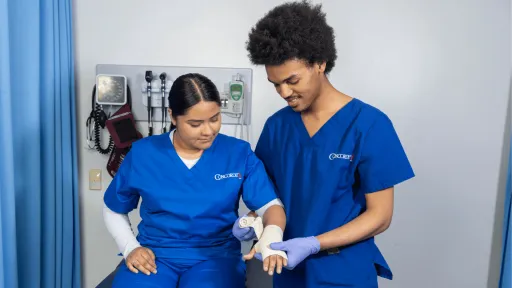
Medical assistants may perform a variety of clinical tasks, including assisting the physician before, during, and after the patient's appointment. If you're employed as a clinical CMA, your responsibilities may include:
- Escorting patients to exam rooms
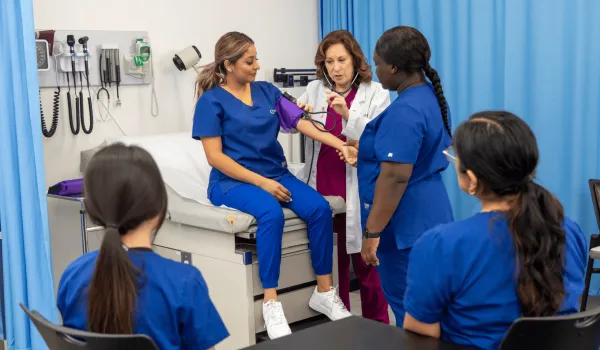
- Taking vital signs such as height, weight, temperature, oxygen saturation, heart rate, and blood pressure
- Recording patient medical histories
- Assisting with physical examinations
- Preparing patients for medical procedures by providing gowns or drapes and positioning the patient
- Managing medical equipment used for patient procedures
- Acting as a chaperone for prostate or pelvic exams
- Instructing patients and their families on wound care, medication use, treatment plans, or medical procedures
- Preparing exam rooms by restocking supplies, changing bedding, and sanitizing surfaces
- Sterilizing medical equipment
- Disposing of contaminated supplies
- Sending prescriptions to pharmacies
- Collecting stool or urine samples
- Drawing blood
- Performing simple laboratory tests
- Maintaining patient records
With additional training, medical assistants may be permitted to perform additional clinical tasks. Though less common, some CMAs are responsible for:
- Administering medications
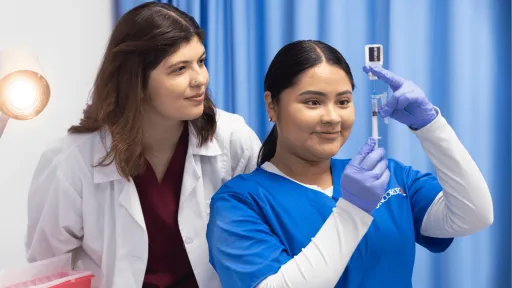
- Giving injections
- Dressing wounds and removing sutures
- Operating an X-ray or electrocardiogram machine to perform diagnostic tests
In most states, medical assistants are permitted to start IVs. In some states, they don't need any additional training for this task. If your state is not listed below, it's up to the employer to decide how much training is required for a medical assistant to start an IV. Many employers prefer to assign this task to more highly trained personnel. If you're not comfortable starting IVs, you should speak with your prospective employer about whether this is something they expect medical assistants to do.
Medical assistants need special training to start IVs in:
- Louisiana
- Maryland
- Nevada
- North Carolina
- Rhode Island
- Virginia
- Washington
Medical assistants are not permitted to start IVs in:
- Alaska
- California
- Connecticut
- Florida
- New Jersey
- New York
- Texas
Administrative Duties of Certified Medical Assistants

Clinical CMAs often perform administrative tasks as well as their clinical duties. Administrative CMAs typically focus exclusively on clerical duties. Depending on the scope of the job, a medical assistant may be responsible for:
- Greeting patients and checking them in for appointments
- Scheduling patient appointments
- Answering the phone, providing information, or forwarding phone calls
- Ordering and maintaining office and medical supplies
- Handling billing and insurance forms
- Following up with patients on payment reminders
- Coordinating referrals to specialists, hospitals, or laboratories
- Maintaining accurate patient records
Medical assistants maintain patient confidentiality in all their interactions. These professionals must be familiar with Health Insurance Portability and Accountability Act regulations, confidentiality protocols, and security measures for paper and electronic health records.
Work Environments for CMAs
As of 2024, 57% of medical assistants worked in physicians' offices[1]. Another 17% worked in hospitals, 10% were employed in outpatient care centers, and 7% worked in the offices of other health care practitioners. Medical assistants usually work a full-time schedule. Those working in a typical physician's office may only work weekdays, while those working in a hospital or emergent care setting are more likely to work nights, weekends, or holidays.
CMAs spend a lot of time on their feet, while administrative CMAs spend long hours sitting at a desk. Both options may be challenging, so it's important to get adequate rest or physical activity outside of your job if you're pursuing training as a medical assistant.
All CMAs need a thorough understanding of medical terminology to communicate clearly with patients, nurses, doctors, insurance companies, and other health care providers. Clinical CMAs will encounter a variety of medical equipment in their job, including blood pressure monitors, stethoscopes, and thermometers. Clerical CMAs should know how to operate printers, scanners, fax machines, and all applicable computer or tablet applications used for scheduling appointments, maintaining EHRs, submitting insurance claims, and handling billing.
Skills and Qualities Needed
Medical assistants need a well-rounded skill set with key qualities that help streamline clinical and clerical tasks in a health care environment. If your strengths lie in the following areas, you may be well-suited to pursuing career training as a medical assistant.
Communication
Medical assistants must communicate clearly with patients, families, and health care staff verbally and in writing. They should demonstrate patience, empathy, and compassion. CMAs need to practice active listening and interpret both verbal and nonverbal communication.
Organization
Organization is essential for well-managed EHRs, appointments, and office flow. CMAs must understand the appropriate workplace processes and systems and implement these consistently to support a positive patient experience.
Attention to Detail
Accuracy is of critical importance in a health care setting. CMAs must record complete, detailed information on medical records, pharmacy orders, referrals, insurance forms, and other documents. Attention to detail helps protect patient safety, confidentiality, and quality of care. The best medical assistants are meticulous with all their activities and double-check their work to ensure a thorough job with every task.
Adaptability and Time Management
A CMA's role in health care is often multifaceted. Depending on the scope of the job, medical assistants may need to move efficiently between clinical and clerical tasks. Each patient is unique, so these professionals should be able to adapt quickly to the needs of each individual. Proper time management will keep patient appointments on schedule and minimize wait time for important exams, procedures, and tests.
Education and Certification
CMAs complete a postsecondary diploma or associate degree program. If you're a high school student interested in becoming a medical assistant, prepare for your future career training by focusing on science courses, such as chemistry and biology.
At Concorde Career College, you may complete a Medical Assistant Diploma program in as little as nine months. An Associate of Applied Science degree takes as little as 18 months via the Medical Assistant program on Concorde's Memphis campus. These programs offer career training that covers:
- Anatomy and physiology
- Body systems
- Pathology
- Medical terminology
- Infection control
- Venipucture
- Diagnostic tests and sample preparation
- EKG testing
- First aid and cardiopulmonary resuscitation
- Laboratory diagnostic procedures
- Medical front office procedures
To become a certified medical assistant, you must attain certification from one of the following organizations.
American Association of Medical Assistants
The AAMA CMA exam is available to students or graduates of an accredited medical assisting program. The exam includes 200 multiple-choice questions, administered in four 40-minute segments with a total of 20 minutes for three optional breaks throughout the day. The first-time pass rate for the AAMA CMA exam is 76%[2].
American Medical Certification Association
The AMCA offers three specialized certifications that apply to medical assistants. These include:
- Clinical Medical Assistant certification: 175 questions over 2 hours and 30 minutes
- Medical Assistant certification: 100 questions over 2 hours
- Medical Administrative Assistant certification: 100 questions over 2 hours
National Center for Competency Testing
With a Medical Assistant Diploma or certificate of completion, you may sit for one of the medical assistant certifications from NCCT. If you want to complete clinical tasks as a medical assistant, you should pursue the Medical Assistant certification. Those interested in working exclusively on administrative tasks may choose the Medical Office Assistant certification.
National Healthcareer Association
The NHA offers certifications for both clinical and administrative medical assistants. You may sit for these exams if you have completed either a medical assistant training program or substantial supervised work experience as a medical assistant. The former is the easier option for most, as employers typically prefer job candidates with a formal education.
To complete clinical tasks, you should pursue the Certified Clinical Medical Assistant certification. A significant 96% of employers encourage or require certification for these medical assistants[3]. If you prefer administrative work, you may pursue the Certified Medical Administrative Assistant certification. Eighty-four percent of employers require or encourage certification for medical administrative assistants[4].
Career Outlook and Advancement
The job outlook for medical assistants is very favorable. The Bureau of Labor Statistics projects 12% job growth between 2024 and 2034, which is significantly higher than the average 4% growth projected for all occupations[5]. The aging baby boomer generation will increase demand for medical services while reducing the number of experienced professionals as this generation retires.
Pursue a Career as a Medical Assistant
If you're interested in pursuing a career as a CMA, consider beginning with a Medical Assistant Diploma or Associate in Applied Science program at Concorde. Our curriculum provides you with the opportunity to engage in the proper training for clinical and clerical career tracks. Contact us to learn more about our health care training opportunities.
Footnotes:
1. Bureau of Labor Statistics. Occupational Outlook Handbook. https://www.bls.gov/ooh/healthcare/medical-assistants.htm#tab-3
2. American Association of Medical Assistants. Certification. https://www.aama-ntl.org/certification
3. National Healthcareer Association. Certified Clinical Medical Assistant. https://www.nhanow.com/certification/nha-certifications/certified-clinical-medical-assistant-(ccma)
4. National Healthcareer Association. Certified Medical Administrative Assistant. https://www.nhanow.com/certification/nha-certifications/medical-admin-assistant-(cmaa)
5. U.S. Bureau of Labor Statistics. Medical Assistants. https://www.bls.gov/ooh/healthcare/medical-assistants.htm#tab-6
Take The Next Step Towards a Brighter Future
Interested in learning more about our Medical Assistant program?
We have a Concorde representative ready to talk about what matters most to you. Get answers about start dates, curriculum, financial aid, scholarships and more!
Related Articles
View All



Latest Articles
View All