Concorde Staff


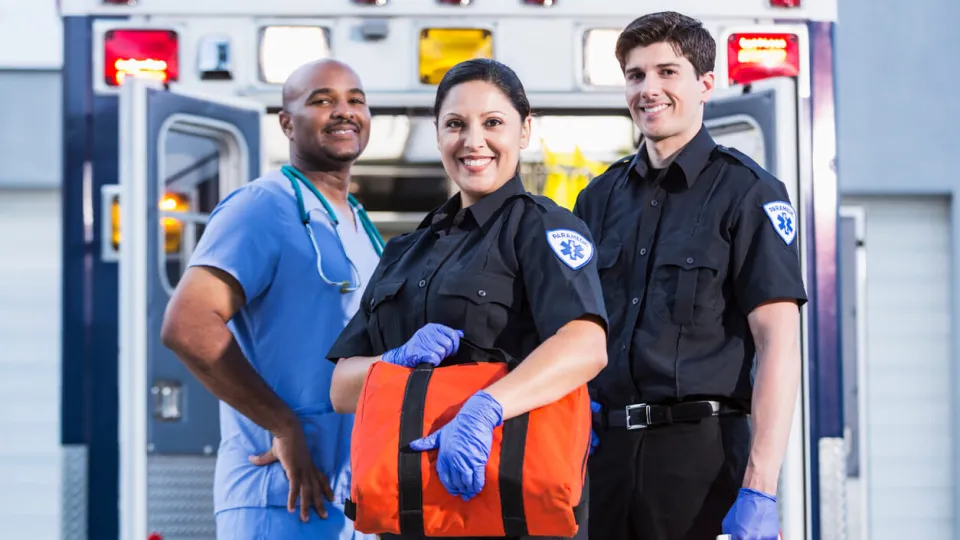
If you’ve spent your career responding to emergencies, you may already have experience that is relevant to certain healthcare education and training pathways.
First responders are often the first point of contact in critical situations. Whether you’re providing initial care, managing high‑stress events, or supporting individuals in distress, many of the skills used in emergency response settings are also valued in healthcare environments.
For EMTs, paramedics, police officers, firefighters, corrections officers, and dispatchers, exploring a transition into a healthcare career can feel like a logical next step. Skills such as communication, decision‑making, and staying calm under pressure are commonly applied in clinical and patient support settings.
If you’re thinking about what comes next, this guide breaks down how to move from first responder to healthcare, with practical steps, career path ideas, and support options to help you get started.
Why First Responders May Be a Good Fit for Healthcare Education
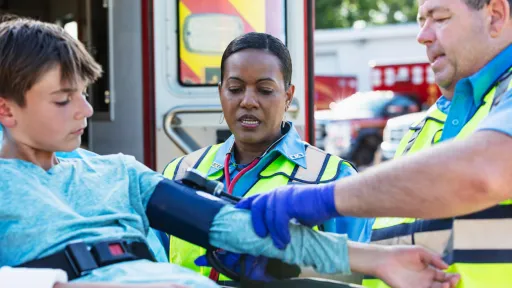
First responders and healthcare professionals often rely on similar foundational skills. According to the U.S. Bureau of Labor Statistics, emergency medical personnel regularly apply patient care, communication, and safety procedures in their roles.¹
If your background includes emergency response, law enforcement, fire service, corrections, or dispatch, you may already have experience that aligns with healthcare education programs.
Common transferable skills include:
Remaining calm and focused in high‑pressure situations
Communicating clearly with patients, families, and team members
Making informed decisions based on changing conditions
Following established safety procedures and protocols
Accurately documenting events and patient information
These skills take time to develop and are applicable across a range of healthcare education pathways. Building on this foundation may help make the transition into a new field feel more manageable.
Exploring Healthcare Education Pathways
There is no single healthcare path that fits every first responder. The best option often depends on your interests, the type of work environment you prefer, scheduling needs, and the level of education you want to pursue.
Below are examples of healthcare education pathways that some first responders choose to explore.
EMTs and Paramedics
With experience in patient assessment, vital signs, and emergency care, some EMTs and paramedics choose to pursue additional education in fields such as nursing, cardiovascular sonography, or diagnostic medical sonography. These roles require completion of an accredited education program and applicable licensure before employment.
Firefighters
Firefighters, particularly those with EMT training, may find their experience relevant when exploring healthcare education pathways such as respiratory therapy or surgical technology. Experience working in high‑stress environments can be helpful when pursuing education for clinical care settings, including hospitals and outpatient facilities.
Police Officers, Corrections Officers, and Dispatchers
Strong communication skills, attention to detail, and experience with de‑escalation can be relevant in healthcare support roles.
Some individuals explore education programs such as medical assisting, healthcare administration, phlebotomy technician, or pharmacy technician. Certificate or diploma programs in these areas may have a shorter program length compared to degree‑based pathways.
All roles require completion of an approved education program and may require certification or licensure, depending on the occupation and state requirements. Program length and credential type vary by role.
Financial Aid and Grant Considerations
Paying for education is a common concern for individuals changing careers. Some students may be eligible to use a combination of financial aid options to help offset educational costs, subject to eligibility requirements.² ³
Options to explore include:
Federal financial aid: Submitting the Free Application for Federal Student Aid (FAFSA®) can help determine eligibility for federal grants, such as the Pell Grant.² ³
State grants: Some states offer education funding programs, which may include options for first responders.
GI Bill® and military benefits: Veterans may be eligible to use education benefits for approved healthcare education programs.
Employer tuition assistance: Some agencies or employers offer education support; availability varies.
Scholarships: Private organizations may offer scholarships for first responders or their families.
Student loans: Loans may help cover remaining costs but must be repaid with interest.
Some schools also offer their own grants for first responders. For example, Concorde Career College offers a First Responder Grant for eligible EMTs, paramedics, police officers, firefighters, corrections officers, and dispatchers.
Grant availability, eligibility criteria, award amounts, and program participation vary by campus and program. Students should contact the campus admissions team for details.
Steps to Get Started

If returning to school feels overwhelming, breaking the process into manageable steps may help:
Define your goals. Consider what you want in your next role, such as patient interaction, work environment, and schedule.
Research education programs. Look for programs that fit your availability and learning preferences, including on‑campus or blended formats where available.
Speak with an admissions advisor. Share your background and ask about program requirements, scheduling options, and financial aid resources.
Create a plan. Develop a schedule that balances work, school, and personal responsibilities.
Taking the first step often involves gathering information. Many first responders begin by learning about available education options and how their existing experience may support their educational goals.
Learn More
If you’re exploring a transition from a first responder role into healthcare education, you can learn more about Concorde programs and the First Responder Grant by contacting an admissions advisor or scheduling a tour. This can help you understand program requirements, timelines, and available support resources.
Footnotes
U.S. Bureau of Labor Statistics. EMTs and Paramedics. Occupational Outlook Handbook.
View EMTs and Paramedics Occupational OutlookFederal Student Aid. Don’t Miss Out on Federal Pell Grants.
Learn About Pell GrantsFederal Student Aid. Pell Grants.
Understand Types of Grants
Take The Next Step Towards a Brighter Future
We have a Concorde representative ready to talk about what matters most to you. Get answers about start dates, curriculum, financial aid, scholarships and more!
Related Articles
View All
Latest Articles
View All