
Concorde Staff


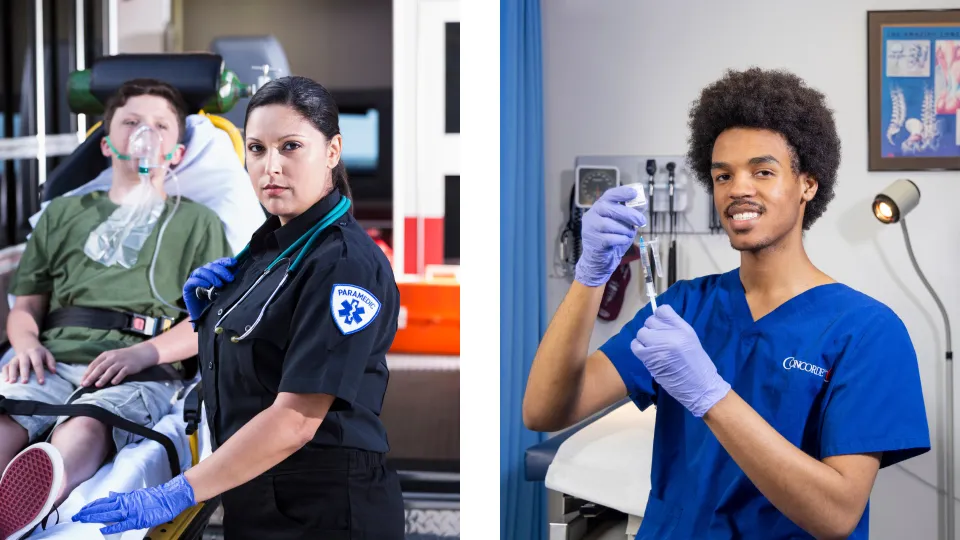
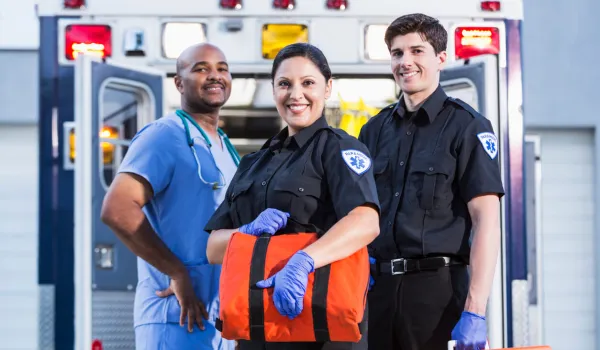
Students interested in a health care career, but unsure which path to take, might consider becoming a paramedic or a medical assistant. While both of these roles are deeply rewarding, they differ when it comes to how and where they provide care to patients. Explore the differences between paramedics and medical assistants and learn about their daily responsibilities, training requirements, and work environments.
What is a Paramedic and What Do They Do?
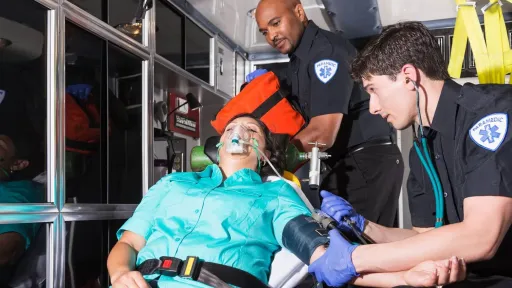
Paramedics are highly trained first responders who provide emergency medical care in critical conditions. They assess patients, deliver life-saving treatment, and transport casualties safely to hospitals. Most paramedics work in ambulances, but they also operate from helicopters, urgent care centers, and at public events. Paramedics treat patients for various concerns, including trauma injuries, cardiac issues, and breathing problems. They must act quickly under pressure to stabilize patients on the scene. Some common paramedic responsibilities include:
- Performing cardiopulmonary resuscitation
- Starting and managing intravenous fluids
- Running and interpreting electrocardiograms
- Controlling bleeding
- Applying braces or splints
- Administering emergency medications
- Assisting during complicated childbirths
Paramedics may use advanced tools, such as airway support equipment, monitor IV fluids placed by another paramedic, and administer approved medications. Their scope of practice depends on their certification level and state regulations. Most paramedics begin their careers as emergency medical technicians, and with further training, advance to perform more complex procedures[1].
What is a Medical Assistant and What Do They Do?
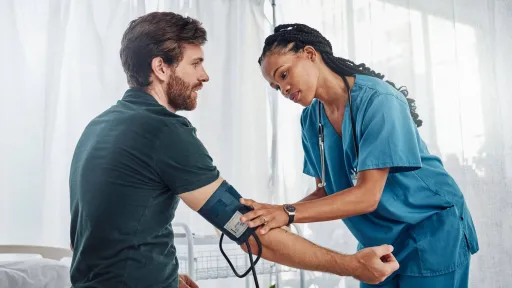
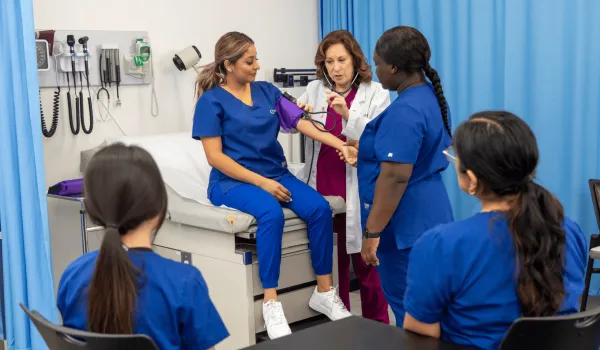
A medical assistant has a vital role in health care by supporting patients and medical teams. They collect patients' medical histories, assist with examinations, and manage administrative tasks such as scheduling appointments and maintaining records. Some common medical assistant responsibilities include:
- Interviewing patients
- Recording medical history
- Measuring vital signs
- Assisting during examinations
- Scheduling appointments
- Collecting medical specimens
- Entering patient data
- Managing medical supplies
Some medical assistants may also perform EKGs or assist with basic procedures, depending on the state where they work and their employer. Concorde Career College's Medical Assistant Program prepares students with hands-on skills in patient care and administrative support. Through blended learning and externships, students gain experience in clinical procedures and medical software. After completing their education, medical assistants may also choose to specialize in areas such as ophthalmology or pediatrics, where they may teach patients how to use medical devices or help with specialty examinations[2].
Differences in Job Responsibilities
Paramedics and medical assistants care for patients, but the nature of their work is very different. Paramedics provide urgent care in high-pressure situations. They make life-saving decisions at accident scenes and during transport. Due to the nature of the care they provide, paramedics work in unpredictable conditions. They might respond to a car accident one moment before assisting a patient with heart problems the next. Paramedics undergo intense training in advanced procedures such as CPR, administering emergency medications, and interpreting EKGs to help them manage these emergencies.
Medical assistants focus on providing patient care in clinical settings. Their routines are more structured and consistent since they don't handle emergency medical situations. They focus on procedures such as recording patients' history, collecting blood samples, and assisting doctors during examinations. Medical assistants often have the opportunity to build long-term rapport with patients during scheduled visits. While paramedics deliver care in critical situations, which gives them brief but intense contact with patients, medical assistants support patients through ongoing care.
Medical Assistant vs. EMT Education and Training Requirements

Medical assistants usually complete a postsecondary educational program such as a diploma or associate degree. Concorde offers both of these options. The associate degree can only be completed after completing the diploma program. You can refer to the Memphis catalog for further details. Classes may include:
- Anatomy and physiology
- Infection control
- Medical records and coding
- CPR and first aid
- Patient communication
- Clinical procedures and diagnostic tests
Concorde's Medical Assistant Program also includes an externship so students may apply their skills in real-world settings. Some medical assistants might learn on the job, but most employers prefer candidates who complete a formal training program[3]. Certification is not always mandatory, but many employers seek applicants with these credentials.
Aspiring paramedics must first complete three to six months of EMT training[4]. Paramedic training varies depending on the program, but typically ranges between six months and two years. Their education may cover:
- Advanced life support
- Airway management
- Pharmacology
- EKG interpretation
- Emergency childbirth
- Clinical and field internships
Work Environment and Schedule
Paramedics respond to emergencies in homes, public spaces, or at the scene of accidents. About 39% work for ambulance services[5], while others find employment in hospitals or through local governments. Their schedules may be long and unpredictable. Some may work 12, 18, or 24-hour shifts. These extended hours and the physical demands of lifting patients and equipment can be challenging.
Most medical assistants work in physicians' offices, but some find employment in hospitals or outpatient care centers[6]. They usually follow standard business hours, although some may work evenings or weekends, depending on the facility. The work is fast-paced but more predictable.
Career Outlook and Advancement Opportunities
The U.S. Bureau of Labor Statistics projects employment for medical assistants to increase by 12% through 2034[7]. This growth is much faster than average and results from an aging population and a growing need for routine medical care in outpatient settings. Medical assistants may also specialize in areas such as pediatrics or cardiology. Many also choose to become office managers or train new medical assistants, while some continue their training to become registered nurses or physician assistants.
The BLS projects a 5% job growth through 2034 for paramedics[8]. These health care professionals may also pursue advanced roles throughout their careers, including flight paramedic, offshore or industrial medic, or work as an emergency dispatcher. With additional education, some may transition into roles in nursing or emergency rooms.
Explore Different Educational Pathways
Both of these professions are essential to the health care system. Paramedics work in fast-paced, high-stakes emergency settings, while medical assistants operate in routine care environments. Students determining the most suitable career for them might ask whether they're passionate about providing life-saving care or prefer a more structured setting with the opportunity of building long-term relationships with patients.
If becoming a medical assistant sounds like the right career move, students should explore Concorde's Medical Assistant diploma program. Through blended learning and real-world externships, they may gain the skills needed to enter the health care field in as few as nine months. Schedule a tour at your nearest Concorde campus or send us a message to request more information.
*While Concorde Career Colleges offers a Medical Assistant training program, it does not provide a paramedic training program, and therefore any information included in this article is for comparative purposes only.
Footnotes:
- U.S. Bureau of Labor Statistics. (2025e, April 18). What EMTs and Paramedics Do. U.S. Bureau of Labor Statistics. https://www.bls.gov/ooh/healthcare/emts-and-paramedics.htm#tab-2
- U.S. Bureau of Labor Statistics. (2025f, April 18). What Medical Assistants Do. U.S. Bureau of Labor Statistics. https://www.bls.gov/ooh/healthcare/medical-assistants.htm#tab-2
- U.S. Bureau of Labor Statistics. (2025b, April 18). How to Become a Medical Assistant. U.S. Bureau of Labor Statistics. https://www.bls.gov/ooh/healthcare/medical-assistants.htm#tab-4
- U.S. Bureau of Labor Statistics. (2025c, April 18). How to Become an EMT or Paramedic. U.S. Bureau of Labor Statistics. https://www.bls.gov/ooh/healthcare/emts-and-paramedics.htm#tab-4
- U.S. Bureau of Labor Statistics. (2025b, April 18). EMTs and Paramedics Work Environment. U.S. Bureau of Labor Statistics. https://www.bls.gov/ooh/healthcare/emts-and-paramedics.htm#tab-3
- U.S. Bureau of Labor Statistics. (2025f, April 18). Medical Assistants' Work Environment. U.S. Bureau of Labor Statistics. https://www.bls.gov/ooh/healthcare/medical-assistants.htm#tab-3
- U.S. Bureau of Labor Statistics. (2025e, April 18). Medical Assistants' Job Outlook. U.S. Bureau of Labor Statistics. https://www.bls.gov/ooh/healthcare/medical-assistants.htm#tab-6
- U.S. Bureau of Labor Statistics. (2025b, April 18). EMTs and Paramedics Job Outlook. U.S. Bureau of Labor Statistics. https://www.bls.gov/ooh/healthcare/emts-and-paramedics.htm#tab-6
Take The Next Step Towards a Brighter Future
Interested in learning more about our Medical Assistant program?
We have a Concorde representative ready to talk about what matters most to you. Get answers about start dates, curriculum, financial aid, scholarships and more!
Related Articles
View All



Latest Articles
View All