

Concorde Staff



Good dental health contributes significantly to a person's well-being, and demand for professionals working in this discipline will likely grow. Dental hygienists and dental assistants are fundamental in helping dentists care for their patients. While the roles are similar, there are also differences. This article explores both professions to help those planning to enter the field decide whether a career as a dental hygienist vs. a dental assistant is the right fit for them.
Overview of Dental Hygienist and Dental Assistant Roles
Licensed dental hygienists are health care professionals who examine patients for signs of oral health issues and perform various procedures to prevent further dental concerns. They also educate patients on how to better care for their teeth, teaching them how to brush and floss properly and demonstrating various dental care techniques. They typically work under the supervision of a dentist, but many operate independently.
Dental assistants often perform administrative tasks, such as booking appointments and maintaining patient records, and assist dentists by preparing treatment rooms and providing the required tools during procedures. They also greet patients and inform clients about their treatments and procedures, if required.
Dental Hygienist Responsibilities and Education
A dental hygienist's tasks include:
- Performing oral health screenings: Dental hygienists routinely perform oral health screenings. They examine a patient's mouth for early signs of cavities and other oral health issues.
- Cleaning teeth: They clean teeth to help prevent gum disease and cavities, using special instruments to remove harmful deposits, such as tartar and plaque.
- Taking and processing dental X-rays: Dentists rely on X-ray imaging to accurately assess a patient's tooth roots and related internal structures. Hygienists usually capture and develop these X-rays.
- Administering anesthesia before procedures: Many U.S. states allow dental hygienists to administer anesthesia before dental procedures. In states where this practice is not permitted, dentists administer the anesthesia themselves.
- Placing dental sealants: Dental hygienists may apply protective coatings to a patient's teeth to help prevent bacteria and food particles from accumulating in hidden areas, reducing the risk of developing cavities.
- Educating patients on oral hygiene: While regularly attending a dentist can help maintain good oral health, proper brushing and flossing are also essential. Dental hygienists show patients how to perform these tasks correctly.
Becoming a dental hygienist requires at least an associate degree from an accredited dental hygiene program. While having a relevant bachelor's degree or master's degree isn't mandatory, earning one may significantly boost a candidate's job prospects. Concorde Career College's accredited Dental Hygiene Associate Degree Programs and give students the opportunity to prepare for a career as a dental hygienist. State licensing requirements may vary, but all graduates must pass the National Board Dental Hygiene Examination before working as dental hygienists[2].
Dental Assistant Responsibilities and Education
Clinical tasks that dental assistants perform include:
- Preparing patients for procedures: Dental assistants prepare patients for their procedures. This includes seating them in the dentist's chair, explaining the procedure, taking their vital signs, and ensuring the patient's comfort.
- Assisting dentists during procedures: They assist dentists during dental procedures by handing dentists the necessary instruments, suctioning patients' oral cavities, and providing support during extractions, fillings, and crowns.
- Sterilizing and preparing equipment: Dental assistants clean and sterilize all instruments and equipment after each procedure. They also ensure the treatment room is clean.
- Taking dental impressions: Dentists often use dental impressions, which replicate a patient's oral cavity, to help them create effective treatment plans. Dental assistants usually take these impressions.
Common administrative tasks for dental assistants include:
- Managing patient records: They help dentists monitor all patient information, including past and upcoming treatment plans, scheduled appointments, and medical histories.
- Scheduling patient visits: They book patient appointments online or via phone and manage the dental practice's schedule.
- Managing billing and insurance claims: Dental assistants bill patients and process insurance claims when required.
- Performing basic office management tasks: Many dental assistants also perform basic office management tasks, such as restocking supplies, greeting clients, and answering phones.
Dental assistants don't need an associate's degree or higher to practice. They require a high school diploma or equivalent and must complete a dental assisting program before they can perform expanded duties, receive formal certifications, or legally take X-rays. Concorde's Dental Assisting and Dental Assistant Diploma programs take as few as nine months to complete and can help students gain the skills and knowledge they need for assisting dentists and performing administrative tasks.
While many states allow entry-level dental assistants to complete basic tasks without certification, performing more complex ones typically requires passing a certification examination administered by the Dental Assisting National Board[4].
Key Differences Between Dental Hygienists and Dental Assistants

Some of the main differences between dental hygienists vs. dental assistants are:
- Education requirements: Dental hygienists need at least an associate degree before they can take the licensing examination. Dental assistants only need a high school diploma or equivalent as part of their formal education.
- Licensing/Certification: Candidates must pass the NBDHE examination to become a licensed dental hygienist. While many states require dental assistants to earn certification, applicants may perform entry-level tasks without being certified.
- Typical job duties: Dental hygienists typically perform various dental procedures themselves, while dental assistants help dentists during procedures.
- Level of patient care: Although their roles differ, both health care professionals ensure that patients negotiate their dental procedures as comfortably as possible.
- Supervision requirements: Dentists usually supervise dental hygienists, though some may work independently. Dental assistants may perform many unsupervised tasks, including administration and preparing patients for procedures.
Job Outlook and Career Opportunities
The U.S. Bureau of Labor Statistics projects the number of dental hygienist jobs to grow by as much as 7% by 2034, which is faster than the average for all professions. [5] The number of dental assistant jobs is also projected to increase by 6% within the same period[6]. Some reasons for this potential growth include a growing awareness of the importance of dental health and an aging population that may require more dental care compared with younger people.
Dental hygienists may also specialize in various subfields, such as geriatric or pediatric dental care, or transition to educational or research-based roles, and management positions. Dental assistants may further their education to become dental hygienists or work in full-time office manager roles.
Choosing Between a Dental Hygienist and Dental Assistant Career
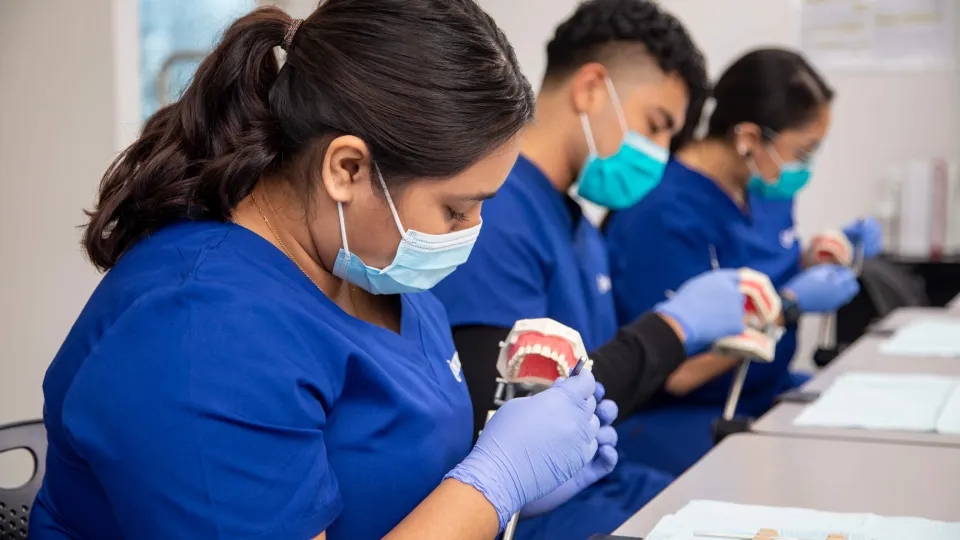
Choosing between a dental hygienist vs. a dental assistant career depends on various factors. Students who prefer performing dental procedures independently might consider working as a dental hygienist. Those inclined toward helping others and keeping things well-organized might be more suited for a dental assistant role.
Another relevant factor may be the time and money students must invest in their required education. Since many states allow entry-level dental assistants to practice straight out of high school, this role might better suit those looking to get into the workforce quickly. They might then pursue other specializations and certifications while working.
Dental hygienists and dental assistants are essential for the smooth running of a dental practice. While the roles differ in requirements and responsibilities, they both involve interacting with patients, helping patients improve their oral health, and educating them on how to prevent future dental issues. Contact Concorde's admissions office for more details on its dental hygienist and dental assisting training programs.
Footnotes
1. National Board Dental Hygiene Examination (NBDHE). (2020). Ada.org. https://jcnde.ada.org/nbdhe
2. Certified Dental Assistant. (n.d.). DANB. https://www.danb.org/exams/exam/cda-exam
3. U.S. Bureau of Labor Statistics. (2024, August 29). Dental Hygienists: Occupational Outlook Handbook. Bls.gov. https://www.bls.gov/ooh/healthcare/dental-hygienists.htm
4. U.S. Bureau of Labor Statistics. (2018, April 13). Dental Assistants : Occupational Outlook Handbook: : U.S. Bureau of Labor Statistics. Bls.gov. https://www.bls.gov/ooh/healthcare/dental-assistants.htm
Take The Next Step Towards a Brighter Future
Interested in learning more about our Dental Assistant program?
We have a Concorde representative ready to talk about what matters most to you. Get answers about start dates, curriculum, financial aid, scholarships and more!


Latest Articles
View All