Concorde Staff



The path to a healthcare career doesn't have to take years of schooling. While some follow the college–medical school–residency route, many careers in healthcare are reachable within a year or two after high school through focused healthcare education programs. If you want a stable, hands-on job that helps people every day, here are five careers you can start soon.
Quick Answer: The five healthcare careers you can prepare for through training that may take one to two years after high school are: medical office administrator, dental assistant, phlebotomy technician, respiratory therapist, and radiologic technologist. Most require a diploma or associate degree program. Phlebotomy has the fastest path—many programs complete in weeks to months. Dental assisting and medical office programs typically take under a year. Respiratory therapy and radiologic technology take roughly two years.
Why Entry-Level Healthcare Is Worth a Look
Healthcare is one of the fastest-growing sectors in the U.S. economy, and demand extends well beyond physicians. The U.S. Bureau of Labor Statistics (BLS) projects that healthcare occupations will grow much faster than the average for all occupations from 2024 to 2034, with about 1.9 million openings projected each year, on average.¹
Many of those openings are for trained support staff at hospitals, dental offices, imaging centers, and clinics—roles that are often reachable through diploma or associate degree programs that take less than two years.
Entry-level roles can also serve as a foundation for career advancement. Many current registered nurses, administrators, and practice managers started as medical assistants, dental assistants, or phlebotomists—though advancement typically requires additional education, certification, or experience. The first credential can help you enter the field; once you're working, you can choose to pursue further education or build a long-term career in that role.
Below are five entry-level healthcare roles to consider—what each role involves, why it may be a good first job, what to look for in a healthcare education program, and how Concorde Career Colleges support each path.
At a Glance: 5 Healthcare Careers After High School
| Career | Typical Training Length | Primary Work Settings | Patient Interaction |
| Medical Office Administrator | Under 1 year (diploma) | Clinics, private practices, hospitals | Moderate (administrative + some clinical) |
| Dental Assistant | Under 1 year (diploma) | Dental offices | High (chairside, patient-facing) |
| Phlebotomy Technician | Weeks to months (certificate) | Hospitals, labs, clinics, blood centers | High (direct patient draws) |
| Respiratory Therapist | ~2 years (associate degree) | Hospitals, ICUs, sleep labs, home care | High (clinical, critical care) |
| Radiologic Technologist | ~2 years (associate degree) | Hospitals, imaging centers, urgent care | Moderate-High (clinical procedural) |
There are many sources available to the general public regarding salary and wage data by profession or industry. If salary is important to you in your decision to attend school, you are encouraged to research this topic. Individual earnings vary by location, employer, experience, and other factors. Concorde does not guarantee employment or salary outcomes.
Medical Office Administrator
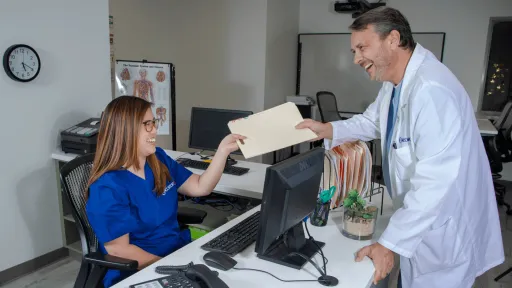
Medical office administrators—also called medical administrative assistants or medical office specialists—keep the administrative side of a practice running. They schedule appointments, manage patient records, handle billing and insurance claims, greet patients, and support daily operations. Some positions also include basic clinical tasks such as taking vital signs or preparing exam rooms.
Why It May Be a Good First Healthcare Job
Medical office work can be a practical way to learn how a practice operates without diving straight into clinical care. You'll see how scheduling, insurance, electronic health records, and patient communication fit together—useful context if you later pursue clinical roles with additional education. The work is steady, hours are typically predictable, and demand is consistent across hospitals, private practices, and specialty clinics.
What to Look for in Training
A strong program covers medical terminology, healthcare law and ethics, electronic health records software, billing and coding basics, and insurance claims processing. Look for programs that include hands-on time with industry-standard software and an externship component, so you can build real-world experience before graduation.
What Concorde Career Colleges Provides
Concorde's Medical Office Administration diploma program trains students in scheduling, billing, coding, electronic health records, and day-to-day office operations. The program includes hands-on software practice and a virtual externship to help build experience before graduation. Program availability and format may vary by campus; contact an admissions advisor for details.
Dental Assistant
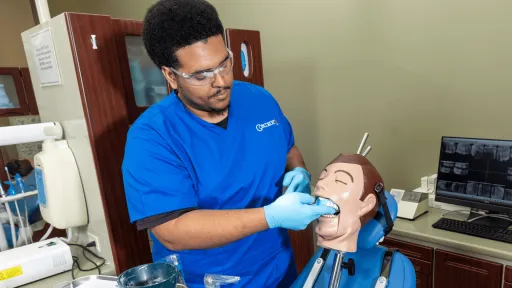
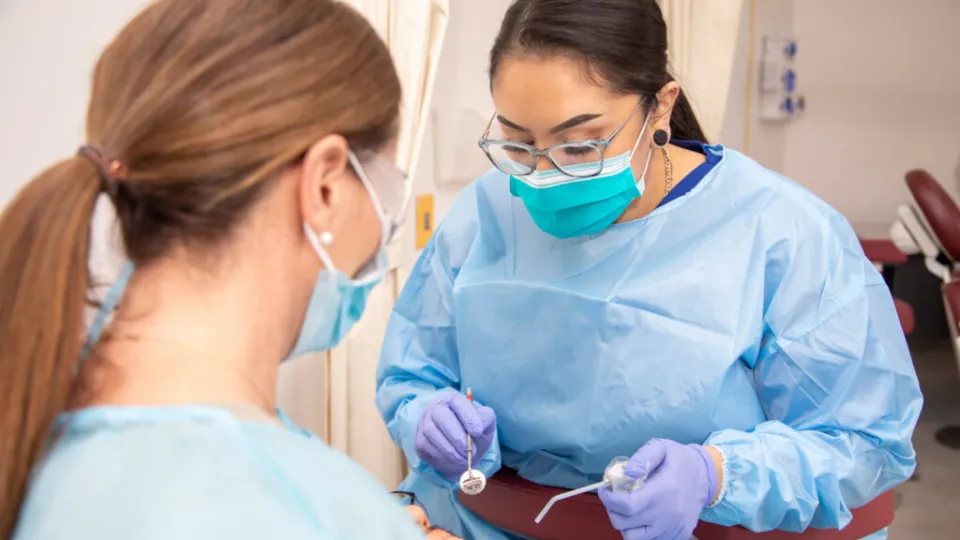
Dental assistants work with dentists and hygienists to keep procedures running smoothly. They prepare patients, sterilize instruments, take and process X-rays where state law permits, mix dental materials, hand instruments during procedures, and educate patients on oral hygiene. In many practices, dental assistants are the team members patients spend the most time with.
Why It May Be a Good First Healthcare Job
Dental assisting offers a path into a stable healthcare role, often through programs that can be completed in less than a year. The work is hands-on, social, and varied, and most dental offices keep regular weekday hours—an easier schedule than many hospital roles. Dental assisting can also serve as a foundation for pursuing dental hygiene, though additional education and credentials are required.
What to Look for in Training
A solid program covers chairside assisting, dental radiography, infection control, dental materials, and patient communication. Hands-on lab time is essential—you can't learn instrument handling from a textbook. Verify the program includes clinical experience in a real dental setting and that lab equipment matches what you'll encounter on the job.
What Concorde Career Colleges Provides
Concorde's Dental Assistant program is built around hands-on learning, with simulation labs for chairside assisting, radiography, and instrument handling before students work with real patients. Externships are arranged at local dental practices, so graduates can leave with experience and a foundation for pursuing employment. Program availability may vary by campus.
Respiratory Therapist
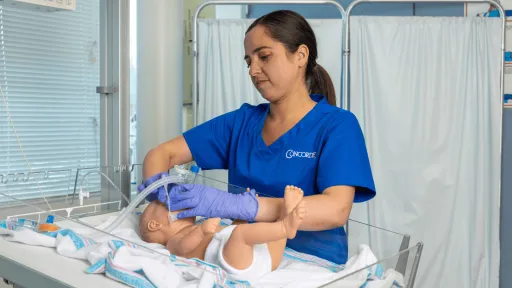
Respiratory therapists care for patients who have trouble breathing from chronic conditions (like asthma or COPD), acute events (such as asthma attacks or pneumonia), or critical situations in the intensive care unit. They administer breathing treatments, manage ventilators, monitor oxygen levels, perform diagnostic tests, and teach patients how to manage conditions at home. Respiratory therapists work closely with doctors and nurses and play a central role in emergency and critical care.
Why It May Be a Good First Healthcare Job
Respiratory therapy is a clinical role with substantial responsibility, but the training path is shorter than many nursing tracks. An associate degree in respiratory therapy typically takes about two years; graduates then must pass credentialing exams and obtain state licensure before they can practice. Respiratory therapists may work in hospitals, sleep labs, home care, and outpatient pulmonary clinics.
What to Look for in Training
Because respiratory therapy is highly clinical, program quality is critical. Look for programs accredited by the Commission on Accreditation for Respiratory Care (CoARC)—the recognized standard for professional credibility.² Strong programs offer extensive simulation lab time, clinical rotations across care settings (ICU, emergency department, pediatrics, sleep), and faculty with active clinical experience.
What Concorde Career Colleges Provides
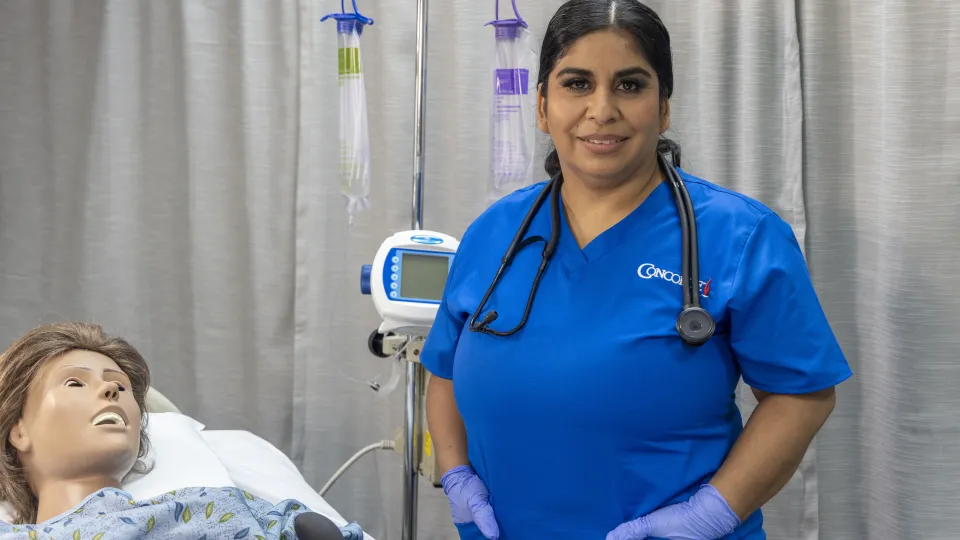
Concorde's Respiratory Therapy program is CoARC-accredited and combines classroom instruction with hands-on lab work and clinical rotations across a range of care settings. Students gain experience in adult, pediatric, and neonatal care, and the program prepares graduates to sit for the credentialing exams required for licensure. Program availability may vary by campus.
Radiologic Technologist
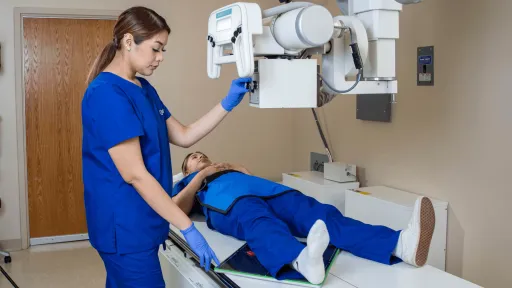
Radiologic technologists—commonly called rad techs or radiographers—perform diagnostic imaging exams like X-rays. They position patients, operate imaging equipment, and follow strict safety protocols to protect everyone in the room. The role blends technical skill with patient care, making it a good fit for people who want hands-on healthcare work with an associate degree.
Why It May Be a Good First Healthcare Job
Radiologic technology offers a path into healthcare with consistent demand. An associate degree typically takes about two years, after which graduates must pass the ARRT certification exam and meet state licensure requirements before they can practice.⁴ From there, radiologic technologists may work in hospitals, urgent care centers, imaging centers, and orthopedic practices—and can pursue specializations like CT, MRI, or mammography with additional credentials.
What to Look for in Training
Start with JRCERT accreditation. The Joint Review Committee on Education in Radiologic Technology sets the professional standard, and most employers and licensing boards expect graduates from accredited programs.³ Beyond accreditation, look for current equipment, dedicated lab time, and clinical placements across hospital and outpatient settings.
What Concorde Career Colleges Provides
Concorde’s Radiologic Technology program is offered at select campuses, and not all locations are accredited by the Joint Review Committee on Education in Radiologic Technology (JRCERT). Prospective students should verify the accreditation status of the specific campus they are considering.
Phlebotomy Technician
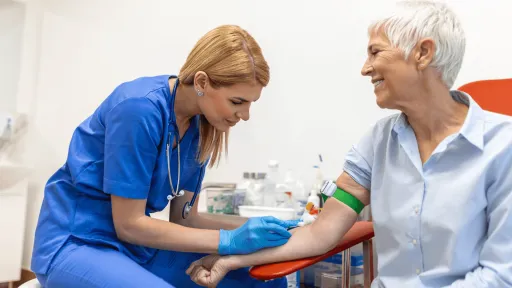
Phlebotomy technicians draw blood for tests, transfusions, donations, and research—and they do much more than just the draw. They prepare patients, locate veins, process and label samples, and maintain accurate records. Because many people are anxious about needles, strong patient-care instincts are just as important as technical skills. The work takes place in hospitals, clinics, blood donation centers, and labs.
Why It May Be a Good First Healthcare Job
Phlebotomy has one of the shortest training paths in healthcare—many programs complete in weeks to months. It can be one of the faster ways to enter the field while you explore your next steps. Blood draws are required across virtually every area of medicine, so demand is steady and widespread. For anyone who wants to enter healthcare and grow from the inside, phlebotomy is a practical starting point.
What to Look for in Training
A strong program covers anatomy, venipuncture technique, sample handling, infection control, and patient communication. Hands-on practice is essential—look for programs that include supervised live draws during a clinical or externship component, since most employers strongly prefer candidates with real-patient experience. Earning certification through the ASCP or a similar body can strengthen your qualifications when seeking employment.⁵
What Concorde Career Colleges Provides
Concorde offers phlebotomy training both as part of its Medical Assistant programs and as a standalone option at select campuses. Students build confidence through supervised venipuncture practice in the lab before moving into clinical experiences with real patients—and graduate prepared to sit for national certification exams. Program availability may vary by campus.
How to Choose the Right Healthcare Career for You
Still feeling unsure after reading through your options? That's completely normal—and it means you're taking the decision seriously. The questions below can help point you in the right direction.
Q: What is the typical timeline from training to pursuing a healthcare career?
Phlebotomy has the fastest path, with many programs completing in weeks to months. Dental assisting and medical office programs typically take under a year. Respiratory therapy and radiologic technology take roughly two years, but both lead to clinical roles with greater responsibility. All roles require meeting applicable certification, licensure, or employer requirements before you can begin working.
Q: How much patient interaction will I have?
Phlebotomy and dental assisting are highly hands-on and patient-facing from day one. Medical office work involves steady patient contact through scheduling and front-desk communication, with less direct clinical care. Respiratory therapy and radiologic technology involve direct, clinical patient care in hospital and outpatient settings.
Q: What types of work environments are common for these roles?
Dental assistants work almost exclusively in dental offices. Medical office administrators work in clinics and private practices. Respiratory therapists, radiologic technologists, and phlebotomy technicians can work across a broader range of settings—including hospitals, imaging centers, labs, and home care.
Q: How much room is there to grow?
Every role on this list can open doors to advancement with additional education or credentials. Medical office administrators can pursue practice management or healthcare administration roles. Dental assistants can pursue dental hygiene with additional education. Respiratory therapists and radiologic technologists can specialize in areas like neonatal care or advanced imaging modalities. Career advancement typically requires additional education, certification, or experience.
Not sure where to start? Concorde's personality assessment can help match your strengths and preferences to programs that may be a good fit for you. It takes only a few minutes—and it can be a helpful conversation starter with an admissions advisor.
A healthcare career may be more within reach than you think—and the time between deciding and starting can be shorter than you'd expect. Concorde has new classes beginning frequently, so when you're ready, contact an admissions advisor to learn about upcoming start dates.
To learn more, request information online at Concorde.edu, schedule a tour at one of Concorde's campuses, or call 1-800-693-7010 to speak with an admissions advisor.
Key Takeaways
Medical office administrator: A diploma program typically takes under a year and teaches scheduling, billing, coding, and electronic health records—a practical administrative entry point into healthcare.
Dental assistant: Programs often complete in less than a year; dental assistants work chairside in dental offices and are among the most patient-facing members of the care team.
Phlebotomy technician: One of the fastest paths into healthcare, with many certificate programs completing in weeks to months; certification through ASCP or a similar body can strengthen job prospects.⁵
Respiratory therapist: An associate degree takes roughly two years and leads to a CoARC-accredited clinical role in hospitals, ICUs, and home care; graduates must pass credentialing exams and obtain state licensure before practicing.
Radiologic technologist: A two-year associate degree and ARRT certification⁴ can open doors to hospitals, imaging centers, and specialty areas like CT and MRI—with room to grow through advanced credentials.
Footnotes
"Healthcare Occupations," U.S. Bureau of Labor Statistics, Occupational Outlook Handbook, https://www.bls.gov/ooh/healthcare/
"Commission on Accreditation for Respiratory Care," CoARC, https://coarc.com/
"Joint Review Committee on Education in Radiologic Technology," JRCERT, https://www.jrcert.org/
"American Registry of Radiologic Technologists," ARRT, https://www.arrt.org/
"American Society for Clinical Pathology Board of Certification," ASCP, https://www.ascp.org/content/board-of-certification
Concorde Career College is accredited by the Accrediting Commission of Career Schools and Colleges (ACCSC) and the Council on Occupational Education (COE). Program length may be subject to change dependent on transfer credits and course load. Please refer to the current course catalog for more information. Concorde does not guarantee admittance, graduation, subsequent employment, or salary amount. Professional certification is not a requirement for graduation, may not be a requirement for employment, nor does it guarantee employment. Registration and certification requirements for taking and passing these examinations are not controlled by Concorde, but by outside agencies, and are subject to change without notice.coming start dates.
Take The Next Step Towards a Brighter Future
Interested in learning more about our Dental Assistant program?
We have a Concorde representative ready to talk about what matters most to you. Get answers about start dates, curriculum, financial aid, scholarships and more!

Latest Articles
View All