Concorde Staff



The summer after high school is a unique time. Exams are done, graduation is behind you, and for the first time in years, nobody's telling you what comes next.
If a healthcare career is on your mind, that open space is more valuable than it looks. The moves you make this summer can shape how quickly you begin training, what role you pursue, and how prepared you feel when your program begins. Here’s how to use your summer to get there.
Key Takeaways
Healthcare education diploma programs can typically be completed in as few as 8–12 months—meaning you could be prepared to enter the field within a year of starting.*
The Bureau of Labor Statistics projects that overall employment in healthcare occupations will grow much faster than the average for all occupations from 2024 to 2034, with about 1.9 million openings projected each year across healthcare occupations nationwide, on average, due to employment growth and the need to replace workers who leave the occupations permanently.¹
Job shadowing and volunteering this summer can help you determine whether healthcare is the right fit before you enroll in a program.
Healthcare includes hundreds of distinct roles—from medical assisting and dental hygiene to surgical technology and respiratory therapy—each with different training paths and work environments.
Volunteering with organizations such as the American Red Cross can provide exposure to health-related service before you enroll.²
Some healthcare education programs offer multiple start dates throughout the year, so you may not have to wait for a traditional fall semester to begin. Contact an admissions advisor for specific start dates.
Why Does the Summer After High School Matter for a Healthcare Career?

The window between high school and your next chapter is shorter than it looks—and more useful than most people realize. This is the right time to pause and ask yourself a few real questions: What kind of patients do you want to help? What setting feels right? What schedule fits your life? The answers become the foundation for everything that follows.
Once a program starts, your focus shifts to coursework, labs, and clinicals. Summer is your window to think, explore, and get ready.
Healthcare isn't a field you have to wait on, either. The Bureau of Labor Statistics projects that overall employment in healthcare occupations will grow much faster than the average for all occupations from 2024 to 2034—with about 1.9 million openings projected each year, on average, due to employment growth and the need to replace workers who leave the occupations permanently.¹ The sooner you start training, the sooner you may be prepared to pursue employment in the field.
Which Healthcare Career Is Right for Me?
Healthcare isn't one career—it's hundreds. Dental hygienists, surgical technologists, medical assistants, respiratory therapists, sonographers, and pharmacy technicians all wear scrubs, but their days look completely different. There's likely a fit for you—you just have to find it.
A few questions can help narrow things down:
How much time do you want to spend in school? Diploma programs can be completed in as few as eight to twelve months.* Associate degree programs typically take about two years.*
Do you want to work directly with patients? A medical assistant or nurse works face-to-face with patients regularly. Roles like sterile processing or medical billing involve less direct patient contact—but are just as essential to patient care.
What environment suits you? Hospitals, dental offices, surgery centers, imaging centers, and physical therapy clinics all operate at a different pace and energy.
Do you want room to grow? Some credentials can serve as a foundation for further education. Others are strong standalone careers. Both are valid paths.
Not sure yet? That's completely fine. Concorde Career Colleges offers a free personality assessment that takes just a few minutes and matches your strengths and preferences to programs that may be a good fit—a helpful first step before talking with an admissions advisor.
Low-Commitment Ways to Explore Healthcare Before You Enroll
You don't have to enroll to find out if healthcare is right for you. A few steps this summer can tell you more than hours of online research:
Shadow someone. Reach out to a provider your family already sees, or ask around for healthcare workers in your network. Even a single afternoon observing a dental hygienist or medical assistant on the job can be eye-opening.
Volunteer. Hospitals, hospice organizations, and community clinics regularly accept volunteers. The American Red Cross is one starting point—some volunteer roles may provide exposure to health-related service.²
Talk to an admissions advisor. A quick call or campus visit costs nothing. Concorde admissions advisors can walk you through program options, schedules, and financial aid for those who qualify—and answer questions you didn't know you had. Call 1-800-693-7010 or schedule a campus tour at one of Concorde's 17 campus locations.
Read a real graduate's story. Hearing from someone who's been through it makes the path feel real. Antwonette Beans-Butler went from medical assisting to nursing, and her story shows what the journey can look like. Individual experiences may vary.
What Should I Look for in a Healthcare Training Program?
Not all programs are the same. Here's what to look for:
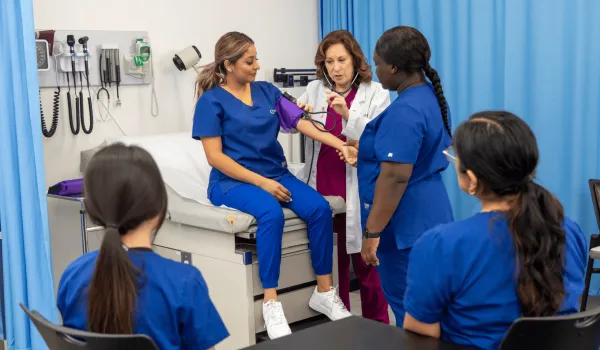
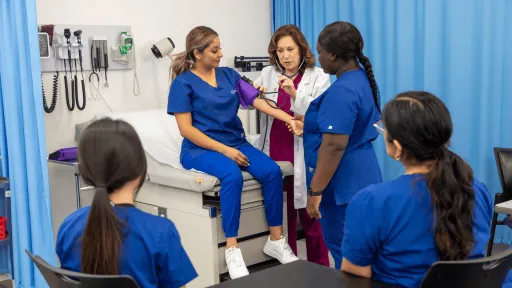
Hands-on labs. Reading about a procedure isn't the same as practicing it. Look for programs with simulation labs and real equipment—so you can build confidence before you ever work with a patient.
Real clinical experience. Many credentials require clinical hours in an actual care setting. Ask whether the school has established relationships with local clinics, hospitals, or dental practices, and how students are placed.
Student support. Healthcare education programs are demanding. Look for tutoring, academic advising, and mental health resources—and ask how the school supports students who face challenges.
Career services. Ask about resume help, interview preparation, employer networks, and graduate outcomes. Concorde does not guarantee employment, salary, or outcomes.
Your Summer Action Plan: A Step-by-Step Guide
You don't need to have it all figured out — you just need a starting point. Follow these steps to move from curious to enrolled with confidence.
Step 1: Research Healthcare Careers — Weeks 1–2
Spend 3–5 hours exploring what healthcare careers exist and what training they require. Use the BLS Occupational Outlook Handbook (https://www.bls.gov/ooh/)—a free, reliable resource—to compare job outlooks and training requirements for at least three roles that interest you. Outcome: You'll finish this step with a short list of roles that match your interests, schedule, and goals.
Step 2: Compare Programs — Weeks 3–4
Identify two or three schools offering the credentials you're interested in. Compare program length, cost, accreditation status, and student support services side by side. Outcome: You'll know which schools are worth visiting in person and which questions to bring with you.
Step 3: Visit a Campus — Week 5
Tour at least one campus, meet an admissions advisor, and see where you'd actually be learning. No website replaces being there in person. Outcome: You'll get a real sense of the environment, the equipment, and the people—which makes the decision much easier.
Step 4: Ask Everything — Week 6
Bring every question to your campus visit: financial aid options (for those who qualify), class schedules, externship placements, and graduate outcomes. Nothing is too small to ask. Outcome: You'll leave with a clear picture of what enrollment actually looks like—costs, timeline, and next steps.
Step 5: Apply When You're Ready — Week 7
Many healthcare education programs offer rolling start dates, so you may not have to wait for a fall semester. When you've done your research and found the right fit, submit your application. Outcome: You'll have a start date on the calendar and a clear path forward.
The summer after high school is one of the few times your schedule is truly your own. Use it well—and it could be the beginning of a path toward a career that offers stability, purpose, and the chance to help people every day.
Frequently Asked Questions
How long does healthcare training take after high school?
It depends on the credential. Diploma programs in fields like medical assisting or dental assisting can be completed in as few as 8–12 months.* Associate degree programs typically take about two years.* Many schools offer rolling start dates, so you may not have to wait for a traditional semester to begin. Program length may vary by campus and is subject to change; please refer to the current course catalog for details.
What healthcare roles can I pursue with a diploma?
A diploma can help prepare you for a range of entry-level healthcare roles, including medical assistant, dental assistant, pharmacy technician, and sterile processing technician, among others. These roles can provide experience in patient care settings and may serve as a foundation for further education and advancement. Additional certification, licensure, or education may be required depending on the role and state.
Do I need prior experience to enroll in a healthcare education program?
Most entry-level healthcare education diploma and associate degree programs do not require prior healthcare experience to enroll. Admissions advisors can walk you through any prerequisites specific to the program you're interested in.
Is job shadowing really worth doing before I enroll?
Yes—even a single afternoon observing a healthcare professional on the job can tell you more than hours of online research. Shadowing helps you determine whether a role's daily reality matches your expectations before you commit to a training program.
What's the difference between a diploma program and an associate degree in healthcare?
A diploma program is typically shorter—often 8–12 months—and focuses on the core skills needed for a specific role.* An associate degree takes about two years and may include broader general education coursework alongside technical training.* Both can help prepare you for entry-level healthcare careers; the right choice depends on your timeline and goals.
How do I know which healthcare career fits my personality?
Start by asking yourself how much patient interaction you want, what kind of environment appeals to you (hospital, clinic, dental office, etc.), and how much time you can invest in training. Concorde Career College’s free personality assessment can also help match your strengths and preferences to specific programs in just a few minutes.
Concorde Career Colleges was built specifically to train students for healthcare careers—offering diploma, associate degree, and bachelor's degree completion programs across nursing, dental, diagnostic, and allied health fields. Programs blend online coursework with hands-on labs and clinical experience, so you get flexibility without sacrificing real-world training. Concorde Career College is institutionally accredited by the Accrediting Commission of Career Schools and Colleges (ACCSC). Some campuses are accredited by the Council on Occupational Education (COE). Select programs hold additional programmatic accreditation.
To learn more about Concorde's healthcare education programs, request information online at Concorde.edu, schedule a tour, or call 1-800-693-7010 to speak with an admissions representative.
*Program length may be subject to change dependent on transfer credits and course load. Please refer to the current course catalog for more information. Concorde does not guarantee admittance, graduation, subsequent employment, or salary amount. Professional certification is not a requirement for graduation, may not be a requirement for employment, nor does it guarantee employment. Financial aid is available to those who qualify but may not be available for all programs.
Footnotes
"Healthcare Occupations," U.S. Bureau of Labor Statistics, Occupational Outlook Handbook, 2024–34 projections, https://www.bls.gov/ooh/healthcare/home.htm
"Become a Volunteer," American Red Cross, https://www.redcross.org/volunteer/become-a-volunteer.html
Take The Next Step Towards a Brighter Future
We have a Concorde representative ready to talk about what matters most to you. Get answers about start dates, curriculum, financial aid, scholarships and more!
Related Articles
View All
Latest Articles
View All