Concorde Staff


It is not too late to switch careers into healthcare. Many entry-level healthcare roles require only 9 to 24 months of training to complete, and Bureau of Labor Statistics data shows that median worker ages in non-bachelor's healthcare occupations are well into the 40s — meaning mid-career entry is the norm, not the exception.¹ ² The American Hospital Association reports widespread staffing shortages across hospitals and outpatient settings, and many of those open roles remain accessible through certificates and associate degrees.¹
If you're sitting in a job that doesn't feel right anymore and wondering whether healthcare could be a real option, the question isn't really about your age. It's about whether the path is built for someone with a life already in motion. The evidence says it is.
Key Takeaways
It is not too late. BLS data shows that mid-career entry into non-bachelor's healthcare occupations is common, with median worker ages well into the 40s.²
Training is shorter than most people expect. Many entry-level healthcare education programs can be completed in 9 to 24 months.
Demand is real and documented. The American Hospital Association identifies widespread staffing shortages across hospitals and outpatient settings.¹
Your existing skills may transfer. Communication, reliability, and composure under pressure are qualities healthcare employers commonly seek—and they often come from years of working in other fields.
The path keeps going. A healthcare credential can serve as a foundation for advancement into nursing, imaging, specialty roles, and beyond, though additional education, training, certification, or licensure may be required depending on the pathway.
Concorde Career College offers healthcare education programs in fields such as medical assisting, dental assisting, respiratory therapy, radiologic technology, surgical technology, and more—most designed to be completed in under two years, with financial aid available to those who qualify.
Are You Really Behind—or Are You Ready?
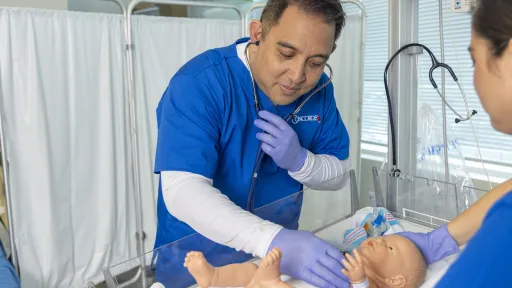
There's a quiet myth that healthcare is for people who knew at 17 they wanted to be in this field. The data tells a different story.
BLS data shows that most non-bachelor's healthcare occupations are staffed by mid-career workers, with median ages well into the 40s.² Many of these professionals came in later—after a first career, raising kids, a layoff, or years of feeling like the work they were doing wasn't the work they wanted to do.
Maturity is valued in this field. Patients respond to it, and employers look for it. The training programs that prepare adults to pursue healthcare careers are often designed with that in mind, built around the assumption that you have a job, a family, or both, and that your time is real and finite.
Your existing work experience may also carry more weight than you might expect. The customer you calmed down in a previous role isn't that different from a patient who's nervous about their first X-ray. The team you covered for when someone called out sick is the same kind of team you'll be on in a clinic. Many healthcare employers recognize those skills and value them.
Why Is Healthcare a Good Career to Switch Into as an Adult?
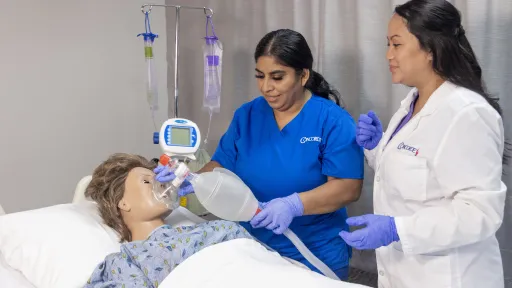
A few things make this field different from most other career changes you could make:
The training is efficient. Many entry-level healthcare education programs run between 9 months and two years. That's a defined commitment with a defined outcome—not a four-year detour from your current life.
The demand is documented. The U.S. faces shortages across nearly every healthcare category, from medical assistants to dental hygienists, according to the American Hospital Association.¹ That gap is not expected to close soon.
The work connects to something real. Most career changers aren't switching for one reason alone. They want their hours to count toward something more substantive. Healthcare can offer direct patient interaction and visible impact from early in your career.
The credential can open doors over time. A healthcare credential can serve as a foundation for advancement into nursing, imaging, or specialty roles—though additional education, training, certification, or licensure requirements may apply depending on the pathway.
What Should Adult Career Changers Look for in a Healthcare Training Program?
Not every healthcare training program is built for adults and career changers. Here's what to prioritize:
Schedule flexibility. Look for evening, hybrid, or compressed programs that work around an existing job or family schedule. Programs designed for traditional students often aren't realistic for someone with a life already in motion.
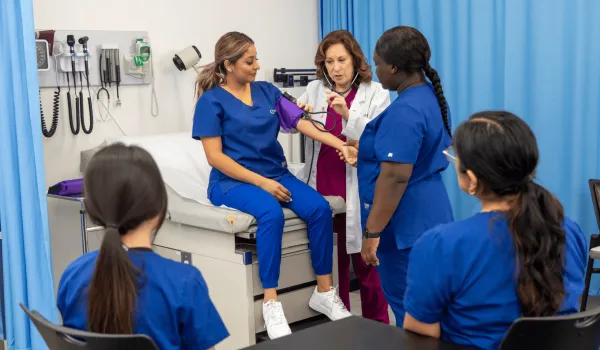
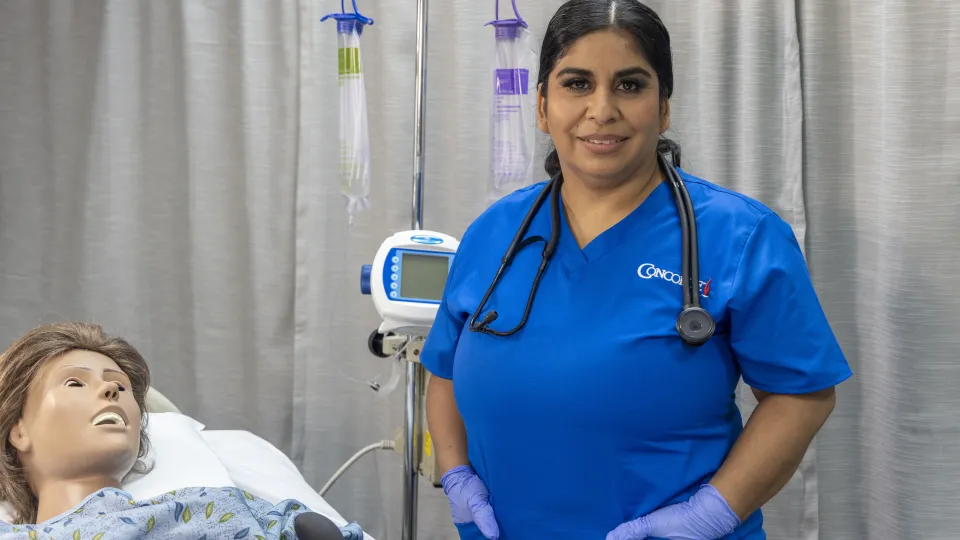
Hands-on training. Healthcare is a profession where much of the learning happens through doing. Strong programs put you in labs, simulations, and clinical rotations early—so you're building real skills, not just reading about them.
Career support. If you don't have a professional network in healthcare yet, look for programs that offer externship coordination, career services assistance, and resume help to support your transition.
A community of people like you. This matters more than most people expect. Walking into a classroom where other students are also career changers—also juggling jobs and families, also committed and a little nervous—can make the process feel achievable rather than isolating.
How to Switch Careers into Healthcare: A Step-by-Step Guide
Switching careers into healthcare is a concrete process. Here is how it typically works:
Identify your target role. Research healthcare occupations that align with your interests, schedule, and goals. Common entry points for career changers include medical assisting, dental assisting, respiratory therapy, radiologic technology, and surgical technology.
Understand the credential requirements. Determine whether your target role requires a certificate, diploma, or associate degree. Many entry-level healthcare roles are accessible without a four-year degree.
Evaluate programs for working adults. Look specifically for programs that offer evening, hybrid, or compressed scheduling. Confirm that hands-on clinical or lab training is built into the curriculum.
Apply for financial aid. Complete the FAFSA to determine eligibility for federal financial aid. Additional aid options may also be available for students who qualify.
Complete your clinical or externship hours. Most healthcare education programs include required hands-on hours in a real clinical setting. This is where classroom learning becomes practical skill.
Obtain any required certification or licensure. Depending on your role and state, you may need to pass a credentialing exam after program completion. Your program should prepare you for this step and clarify what is required in your state.
Begin your job search with career services support. Use your program's career services resources—employer connections, resume help, and externship networks—to support your transition from graduate to working professional.
What Concorde Career College Provides
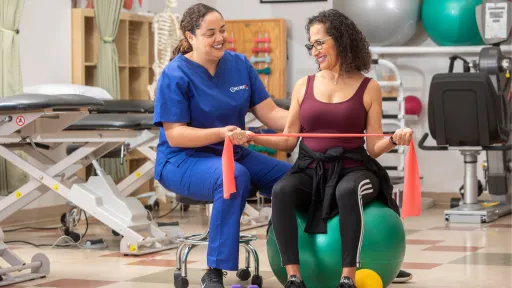
Concorde Career College was built for students like this. Many of the people who walk through our doors are career changers—coming from retail, food service, office work, military service, or careers they've outgrown. They're parents, partners, and professionals who decided that the next chapter was going to look different.
Our healthcare education programs are designed to fit working lives. Hands-on training supports the development of practical skills alongside foundational knowledge. Our career services team works to help connect graduates to externships and employers in their area.
Concorde offers training in the healthcare fields that adult learners most often seek, including medical assisting, dental assisting, respiratory therapy, radiologic technology, surgical technology, and more. Most programs are designed to be completed in under two years, with financial aid available to those who qualify. Program availability varies by campus; prospective students should contact an admissions representative for details.
The Real Question
The question isn't whether it's too late. It's whether you're ready to act on the answer. That's a question only you can answer.
If the answer is yes, the path forward may be shorter and more accessible than most people assume. Healthcare needs people who've lived a little, held a job, managed hard days, and shown up anyway. You may be the kind of candidate many employers are looking for.
Talk to a Concorde Career College admissions representative about which program may fit your goals, your schedule, and the life you're already living.
Frequently Asked Questions
What age is too old to start a healthcare career?
There is no upper age limit for entering a healthcare career. BLS data shows that median worker ages in non-bachelor's healthcare occupations are well into the 40s, indicating that mid-career and later-career entry is common across the field.² Many healthcare employers value maturity, reliability, and life experience — qualities that often come with age.
How long does it take to get a healthcare certificate or degree?
Many entry-level healthcare education programs can be completed in 9 to 24 months, depending on the credential type and program format. Certificate and associate degree programs are among the most common pathways for career changers entering the field without a prior healthcare background.
What are some healthcare career options that may be accessible with less than a four-year degree?
Roles such as medical assistant, dental assistant, surgical technologist, respiratory therapist, and radiologic technologist are commonly entered through certificate or associate degree programs rather than four-year degrees. Program length and specific credential requirements vary by role and state.
Do transferable skills from other careers matter in healthcare?
Yes. Many healthcare employers seek candidates with strong communication skills, composure under pressure, reliability, and the ability to work as part of a team — all of which can be developed across a wide range of non-healthcare careers. Prior work experience in customer-facing, service, or team-based environments is often considered relevant by employers.
Is financial aid available for healthcare training programs?
Financial aid may be available to students who qualify, including federal financial aid programs. Prospective students should speak directly with an financial aid representative to understand what options may apply to their specific situation and program.
How do I know if a healthcare training program is right for adult learners?
Look for programs that offer flexible scheduling (evening, hybrid, or compressed formats), early hands-on clinical training, externship coordination, and dedicated career services support. Programs designed specifically for working adults will typically accommodate existing job and family commitments rather than requiring you to put your life on hold.
Footnotes
American Hospital Association. "Health Care Workforce: A System Under Pressure, Poised for Reinvention." (2025). https://www.aha.org/aha-center-health-innovation-market-scan/2025-12-09-health-care-workforce-system-under-pressure-poised-reinvention
U.S. Bureau of Labor Statistics. "Employed people by detailed occupation and age." (2024). https://www.bls.gov/cps/cpsaat11b.htm
Take The Next Step Towards a Brighter Future
Interested in learning more about our Cardiovascular Sonography program?
We have a Concorde representative ready to talk about what matters most to you. Get answers about start dates, curriculum, financial aid, scholarships and more!
Related Articles
View All


Latest Articles
View All