

Concorde Staff



Diagnostic ultrasonography, also known as sonography or ultrasound imaging, is a procedure that uses sound waves to produce images of the body. It's typically noninvasive, and health care professionals use it to evaluate a wide range of conditions and symptoms. This radiation-free imaging technique provides an essential means of assessing patient health. Diagnostic medical sonographers play a vital role in this procedure by operating the ultrasound equipment, capturing images, and working closely with patients throughout the procedure.
How Diagnostic Ultrasonography Works
Ultrasonography captures images of internal tissues and organs using high-intensity sound waves at frequencies above the range of human hearing. These sound waves are transmitted by ultrasound probes known as transducers. They bounce off internal structures in the body and return to the probe, where they're converted into electrical signals.
The ultrasound process uses these signals to create a real-time picture (sonogram) on a computer screen. A sonogram is a visual representation of energy distribution at different frequencies. Ultrasonography doesn't involve radiation.
Sonograms can help diagnose a variety of issues. A sonographer usually places the transducer on the outside of the body, applying gel to the patient's skin to help transmit sound waves into the tissues. Some diagnostic ultrasound scans capture images from inside the body using probes inserted into blood vessels, the gastrointestinal tract, or the vagina.
Doppler ultrasounds can capture movement, such as a fetal heartbeat, or the flow of blood through the body. Depending on the equipment, ultrasonography can capture 2D, 3D, and 4D images.
Related: sonography vs ultrasound tech
Types of Diagnostic Ultrasound Exams
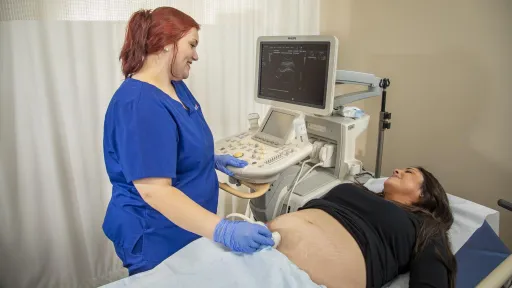
Sonographers use several types of ultrasounds to focus on different parts of the body and provide accurate diagnostic imaging of specific areas.
Obstetric Ultrasounds
Obstetric ultrasonography produces images of an embryo or fetus. During pregnancy, scans can verify the presence of a living fetus, estimate the stage of the pregnancy, determine whether there are multiple embryos, and evaluate the position of the fetus and placenta. Ultrasonography can also determine the volume of amniotic fluid surrounding the baby, assess its well-being, and diagnose congenital abnormalities. Obstetric scanning is valuable outside pregnancy to capture diagnostic images of the uterus, fallopian tubes, and ovaries.
Doppler ultrasounds can assess the blood flow in the fetus, placenta, or umbilical cord. Some doctors request 3-D obstetric ultrasounds that produce a more detailed image of the baby.
Abdominal Ultrasounds
Abdominal ultrasonography can evaluate the liver, kidneys, spleen, pancreas, gallbladder, bile ducts, and abdominal blood vessels. Medical professionals use it to diagnose gallstones, kidney stones, abnormal liver function, and enlarged organs. An abdominal Doppler ultrasound can detect blood clots, tumors, and areas of reduced or increased blood flow, which may indicate serious health conditions.
Cardiac Ultrasounds
Cardiac ultrasounds, or echocardiograms, capture images of the heart and its vessels. Sonographers can use 2-D or 3-D echocardiograms to produce images of the heart valves, walls, and vessels. Doppler echocardiograms evaluate the speed and direction of blood flow in the heart and vessels to identify leaks or blockages and assess blood pressure. There are several types of echocardiograms:
- Transthoracic echocardiograms evaluate blood flow through the heart and heart valves.
- Transesophageal echocardiograms capture images of the aorta from inside the body.
- Fetal echocardiograms assess the hearts of unborn babies.
- Stress echocardiograms determine how physical activity and stress impact the heart by evaluating its response before and after exercise.
Echocardiograms are a specialized form of diagnostic ultrasonography and require specific training. If a sonographer wishes to become an echocardiogram technician, they need to complete an educational program that focuses on this type of ultrasonography.
Vascular Ultrasounds
Vascular ultrasound scans evaluate blood flow in the veins and arteries of the legs, arms, and neck. Vascular ultrasound can help diagnose a wide range of diseases and health conditions, including varicose veins, blood clots, atherosclerosis, and deep vein thrombosis.
Related: Cardiovascular Sonography
Musculoskeletal Ultrasounds
Musculoskeletal sonograms produce high-resolution images of muscles, tendons, ligaments, joints, and nerves. They're effective at helping physicians evaluate the source of pain or discomfort that occurs with movement, as the ultrasound can capture images in real time as the patient performs different maneuvers. Musculoskeletal ultrasounds can help diagnose tendonitis, carpal tunnel syndrome, bursitis, and similar conditions.
Breast Ultrasounds
Breast scans can identify and evaluate masses in the breast tissue. A Doppler ultrasound can also assess blood flow around the mass to provide additional information. Physicians may use breast ultrasounds for supplemental breast cancer screening to catch abnormalities that a mammogram doesn't detect. A breast ultrasound can also provide guidance during a biopsy to help the surgeon locate the affected tissue.
The Role of Diagnostic Medical Sonographers
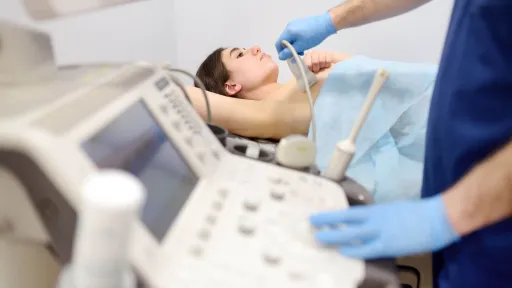
Diagnostic medical sonographers require a well-rounded skill set that includes technical and interpersonal skills. A diagnostic sonographer's responsibilities include:
- Explaining the procedure and prepping the patient
- Positioning the patient for ultrasound scanning
- Operating ultrasound equipment to produce diagnostic images
- Evaluating images for quality and appropriate visualization
- Identifying abnormal or normal results
- Offering a preliminary analysis to physicians
- Maintaining patient records
Diagnostic medical sonographers communicate extensively with patients and medical teams. They need effective verbal communication skills for daily interactions and efficient written communication for accurate charting. Though they're not responsible for diagnosing health conditions, diagnostic medical sonographers should know how to interpret the basic elements of sonograms. Attention to detail is crucial to capturing the correct images and identifying anomalies.
Sonographers may spend long hours on their feet. Their duties may include positioning patients and moving large pieces of medical equipment, so it's important to have good stamina.
Related: A Day in the Life of a Sonographer
Education and Certification for Sonographers
Individuals interested in the field typically pursue an associate or bachelor's degree in diagnostic medical sonography. Concorde Career College offers an associate degree at select campuses, which can be completed in as few as 21 months. The curriculum includes both didactic and clinical instruction. Concorde's program offers students the opportunity to learn how to operate ultrasound equipment and accurately capture pathological, physiological, and anatomical data.
After completion of their degree program in medical sonography, aspiring sonographers can sit for the Registered Diagnostic Medical Sonographer exam from the American Registry of Diagnostic Medical Sonographers. This credential isn't required at the state or national levels, but many employers prefer or mandate it.
The RDMS exam consists of two parts. The first element is the Sonography Principles and Instrumentation exam. Students can take this test before they graduate from their degree program, provided they've completed the appropriate physics, physical principles, and instrumentation of sonography coursework. After graduation, they can complete the second part of the RDMS exam, which is a specialized test on one of the following:
- Abdomen
- Breast
- Fetal echocardiography
- Obstetrics and gynecology
- Pediatric sonography
To maintain the ARDMS credential, certificate holders must pay an annual renewal fee and complete an attestation stating that they're committed to a gold standard of care and full compliance with ARDMS policies. There's also a minimum requirement of 30 continuing medical education hours every three years.
Learn more about: Concorde's Diagnostic Medical Sonography Programs.
Career Outlook for Diagnostic Medical Sonographers
The job outlook is favorable for diagnostic medical sonographers. The Bureau of Labor Statistics projects that job opportunities in this field will increase by 13% between 2024 and 2034. This is far in excess of the average 3% job growth that's projected across all occupations in the United States.
Much of this growth is due to the aging population. As people age, they may need more medical care, including diagnostic services.
The majority (57%) of diagnostic medical sonographers work in hospitals. Another 21% work in physicians' offices, 10% work in medical diagnostic laboratories, 4% work in outpatient care centers, and 2% are self-employed.
Related: How to Pursue a Career as a Diagnostic Medical Sonographer
Is Diagnostic Ultrasonography the Right Choice?
Diagnostic ultrasonography is a valuable tool for diagnosing and treating a wide range of health conditions. From evaluating the health of an unborn baby to guiding the course of treatment for heart disease, ultrasonography plays a valuable role in the modern health care system. If you're interested in training for a career as a diagnostic medical sonographer, explore Concorde's Diagnostic Medical Sonography program, which offers you the opportunity to engage in the training you need.
U.S. Bureau of Labor Statistics: Occupational Outlook Handbook: Diagnostic Medical Sonographers and Cardiovascular Technologists and Technicians: Job Outlook. https://www.ardms.org/maintain-certification/cme/
U.S. Bureau of Labor Statistics: Occupational Outlook Handbook: Diagnostic Medical Sonographers and Cardiovascular Technologists and Technicians: Work Environment. https://www.bls.gov/ooh/healthcare/diagnostic-medical-sonographers.htm#tab-3
Take The Next Step Towards a Brighter Future
Interested in learning more about our Diagnostic Medical Sonography program?
We have a Concorde representative ready to talk about what matters most to you. Get answers about start dates, curriculum, financial aid, scholarships and more!
Related Articles
View All


Latest Articles
View All