
Concorde Staff


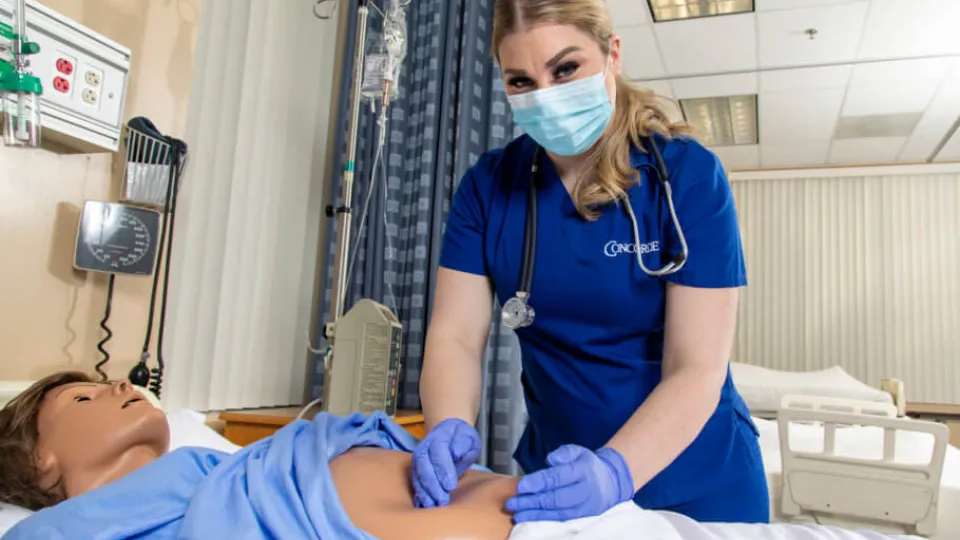
It's possible to work as a nurse without a traditional Bachelor of Science in Nursing. This qualification allows students to work as nurses in hospitals, health centers, and private practices. However, it's important to understand the different options and credentials available for a nursing career, and their possible implications for the future. Let's explore alternative paths to nursing credentials for a rewarding health care role.
Types of Nursing Credentials

While a nursing certification is typically a requirement, there are alternative pathways for those without a traditional nursing degree or a background in nursing. The most common way to train as an RN without a BSN is by earning an Associate Degree in Nursing from Concorde Career College, which could be completed in approximately two years. Other nursing roles, such as a licensed practical nurse or certified nursing assistant, don't require a bachelor's degree. Here's a breakdown of the different options:
- CNA: CNA training focuses on the basics of patient care. It takes around four to eight weeks and does not need a degree.
- LPN: LPNs have a diploma or certificate, work under RNs, and must pass the National Council Licensure Examination for Practical Nurses to become licensed. Concorde offers Nursing Diploma programs that can be completed in as few as 13 months.
- ADN: This degree, usually completed in two years, qualifies individuals to become RNs and is a common path for those looking to enter the nursing field without a BSN. Concorde offers a Nursing (Pre-Licensure) program that can take as few as 21 months to complete.
- BSN: While not mandatory for RN licensure, employers often prefer a BSN, especially in larger hospitals and for advanced roles. Concorde offers an RN-to-BSN program that can take as few as 17 months to complete.
Qualifying as an RN Without a BSN
Working as an RN without a BSN in nursing is possible. An ADN or Nursing Diploma program may qualify someone to take the National Council Licensure Examination for Registered Nurses or Practical Nurses and become licensed.
ADN programs usually take around two years to complete, and some accelerated programs offer this in as few as 21 months. Passing the NCLEX-RN exam is a requirement to becoming a licensed RN. While it's possible to become an RN without a BSN, which is the faster route, keep in mind that some employers may prefer or even require BSN degrees for certain positions. The BSN degree may offer more career opportunities over the long term.
Accelerated BSN Programs

Accelerated BSN programs are an option for those with a non-nursing bachelor's degree who want to become nurses. These programs are designed for students who already hold a bachelor's degree in another field, and they typically take 12-18 months to complete. Coursework is intensive and focused on deepening existing nursing skills.
The programs include clinical experiences that provide hands-on training, with some programs requiring over 750 hours of clinical experience. Graduates are eligible to take the NCLEX-RN exam after completing the program. This option allows career changers to enter nursing more quickly than starting a traditional four-year BSN program from scratch. As of 2023, there are 327 accelerated baccalaureate programs in the U.S., with 36 new programs in the planning stages.
Bridge Programs for LPNs
Bridge programs, such as LPN-to-RN, are alternative nontraditional nursing programs for those without a traditional nursing degree. LPNs can pursue bridge programs to train as RNs. These programs build on existing nursing knowledge and skills. They may be shorter than traditional nursing programs, with some LPN to BSN programs completed in as few as nine months for full-time students or two years for part-time students.
Options include LPN-to-ADN and LPN-to-BSN programs. Graduates can take the NCLEX-RN exam. This option allows LPNs to advance their careers and increase their scope of work. Many LPNs are interested in pursuing further training, with one study showing that 88% of Connecticut LPNs aim to pursue further education, with 81.8% specifically targeting a Bachelor of Science in Nursing program.
Challenges and Considerations

There are benefits, challenges, and considerations for those who wish to pursue a career in nursing without a traditional degree. Reported challenges include:
- Intensive study and time commitment are necessary for accelerated programs.
- Potential difficulties balancing both work and study could arise.
- Possible limitations in job opportunities compared to BSN-prepared nurses may result.
Students should thoroughly research the state requirements for nursing licenses and consider their long-term career goals and potential for advancement before making a decision. While alternative pathways exist, dedication and hard work are necessary to succeed in nursing. Key challenges in accelerated nursing programs include time management, work-school balance, increased stress, financial considerations, and social isolation.
Pursue Your Nursing Career With Concorde
While it is possible to enter nursing without a traditional nursing degree, there are various pathways to consider. Research your options thoroughly and consider your long-term career goals when choosing the best option. Regardless of the route you choose, keep in mind that becoming a nurse requires dedication, hard work, and a commitment to lifelong learning.
The job outlook for ADN nurses is strong. Many employers prefer BSN-prepared nurses, with 72% of employers expressing a strong preference for BSN program graduates. Concorde offers three nursing programs, some taking as few as 17 months to complete. Take the first step towards training as a nurse by contacting an admissions representative today.
Frequently Asked Questions
Here are some common questions about becoming a nurse without a nursing degree.
What are the specific educational requirements for an LPN?
The requirements vary depending on the institution, but typically include a high school diploma or equivalent, a vocational training course, and passing the NCLEX-PN exam.
What percentage of RNs in the U.S. have a BSN degree?
As of 2022, 71.7% of RNs had a baccalaureate or higher degree as their highest level of nursing education.
How long does it typically take to complete an ADN program?
An ADN program typically takes two years to complete. However, some programs, such as those at Concorde, may be completed in as few as 21 months.
What is the national pass rate for first-time NCLEX-RN exam takers?
In 2024, first-time exam takers in the U.S. had an NCLEX-RN pass rate of over 91%.
What is the average length of clinical experience hours required in accelerated BSN programs?
Accelerated programs usually require 700 to 800 hours of clinical experience.
What is the typical duration of an LPN-to-BSN bridge program?
An LPN-to-BSN bridge program usually takes around two to four years to complete, depending on the program and whether it's completed full time or part time.
What percentage of LPNs pursue further education to train as RNs?
Approximately 17% of RNs in the U.S. were previously licensed LPNs/LVNs. This means a larger percentage, but not the majority, complete further education to become RNs.
What are the most challenging aspects of accelerated nursing programs, according to recent graduates?
The most common challenges of accelerated programs include time commitment, balancing work and study, and managing stress.
What percentage of hospitals require or prefer BSN-prepared nurses for new hires?
Studies suggest that over 80% of employers prefer hiring BSN nurses, while 43% of hospitals and other health care settings require nurses to have BSNs.
U.S. Bureau of Labor Statistics. (2019, April 12). Licensed Practical and Licensed Vocational Nurses : Occupational Outlook Handbook: : U.S. Bureau of Labor Statistics. Bls.gov. https://www.bls.gov/ooh/healthcare/licensed-practical-and-licensed-vocational-nurses.htm
U.S. Bureau of Labor Statistics. (2024, August 29). Registered Nurses: Occupational Outlook Handbook. Bls.gov. https://www.bls.gov/ooh/healthcare/registered-nurses.htm
How to Become a Certified Nursing Assistant (CNA). (2025). Nurse.org. https://nurse.org/resources/certified-nursing-assistant-cna/#how-to-become-a-cna
Lasater, K. B., Sloane, D. M., McHugh, M. D., Porat‐Dahlerbruch, J., & Aiken, L. H. (2021). Changes in proportion of bachelor’s nurses associated with improvements in patient outcomes. Research in Nursing & Health, 44(5), 787–795. https://www.ncbi.nlm.nih.gov/pmc/articles/PMC8440404/
Rosseter, R. (2024, April). Nursing workforce fact sheet. American Association of Colleges of Nursing. https://www.aacnnursing.org/news-data/fact-sheets/nursing-workforce-fact-sheet
admin. (2025, November 4). NCLEX Pass Rates 2025: What You Need to Know – Kaplan Test Prep. Kaptest.com. https://www.kaptest.com/study/nclex/nclex-pass-rates-what-you-need-to-know/?srsltid=AfmBOopTKu1u7AlmBdnxkRWTt1B6GdOmwA3reM606CNl7AiEzBxYEGAp
All. (2021, January 3). Accelerated Nursing Programs. All Nursing Schools. https://www.allnursingschools.com/articles/accelerated-nursing-programs/
Lasater, K. B., Sloane, D. M., McHugh, M. D., Porat‐Dahlerbruch, J., & Aiken, L. H. (2021). Changes in proportion of bachelor’s nurses associated with improvements in patient outcomes. Research in Nursing & Health, 44(5), 787–795. https://www.ncbi.nlm.nih.gov/pmc/articles/PMC8440404/
Diaz, S., Elwell, J., Rigolosi, R., & Proto, M. (2024). Barriers and motivating factors for licensed practical nurses to pursue a bachelor’s degree in nursing. Journal of Professional Nursing, 51, 51–57. https://doi.org/10.1016/j.profnurs.2024.01.010
Take The Next Step Towards a Brighter Future
Interested in learning more about our Nursing (Pre-Licensure) program?
We have a Concorde representative ready to talk about what matters most to you. Get answers about start dates, curriculum, financial aid, scholarships and more!
Related Articles
View All


Latest Articles
View All