
Concorde Staff



Military medics address the healthcare needs of military personnel, working everywhere from the front lines to base clinics and hospitals. This career path provides hands-on contact with patients, often in challenging situations. If you're leaving military service but want to stay on a patient-centered healthcare path, a career as a registered nurse (RN) may offer the ideal fit.
Working as a military medic doesn't immediately qualify you to work as an RN, but it does give you a strong background in patient care that may serve you well throughout your continuing education. Here's what you need to know about making the move from military medic to RN.
Why Military Medics Often Explore Nursing After Service
Military medics play an essential healthcare role in the armed forces. Military medics typically can hold a wide range of jobs in the armed forces [1]. This includes:
- Army Combat Medic Specialist: Providing emergency medical care in the field
- Special Forces Medical Sergeant: Handling first response and trauma medicine, including dentistry and optometry
- Navy/Marine Hospital Corpsman: Assisting healthcare professionals in providing medical care to armed forces personnel and their families
- Air Force/Space Force Aerospace Medical Service Specialist: Providing technical nursing duties and medical, dental, and emergency treatment at remote sites, deployed locations, and other medical facilities
- Air Force Pararescue Specialist: Rescuing and treating injured Airmen in hostile or unreachable areas
- Coast Guard Health Services Technician: Providing medical services, including X-rays, diagnostic testing, dental treatment, and minor surgeries in Coast Guard clinics
Individuals who thrive as military medics may want to stay in the healthcare field when they leave the military. Military medical experience and nursing have many things in common. Nurses experience many of the same challenges and rewards as military medics. If you enjoy hands-on patient care in a fast-paced environment, transitioning to a career in nursing may be the right path.
Understanding the Difference Between a Military Medic and an RN
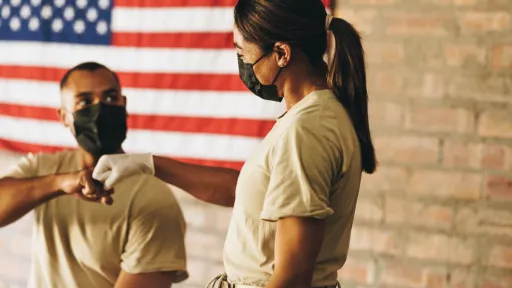
There are many paths available to military medics [2]. Army combat medics train for about four months and carry weapons alongside medical gear, serving with their units. Special Operations Combat Medics train for over a year to work with the Army Special Forces. Air Force Combat Medics complete 22 weeks of medic training followed by a 20-week Pararescue Recovery Specialist Course. Navy medics can serve the Navy, specializing in diving, aviation, or clinical work. Navy medics also serve the Marine Corps.
Military medics may work in a specialized field or location with a particular demographic, such as service-age individuals in their platoon. In these cases, the scope of work for a military medic may be narrower than that of an RN. Some military medics work in clinics and hospitals that serve military families and veterans, giving them a wider range of experience. However, their responsibilities may still be narrower than those of a licensed nurse.
While military medics receive varying levels of education, they typically have a laser focus on their specific position. Their education is often narrower in scope and doesn't automatically qualify them for the civilian licensing required for RNs.
What RN Licensure Typically Requires
Proper licensure is essential for the military medic to nursing transition. RN licensure requirements vary by state [3]. To obtain licensure, you must complete an approved nursing program. This program should prepare you to sit for the NCLEX-RN (National Council Licensure Examination-Registered Nurse).
The NCLEX-RN evaluates the candidate's knowledge of four essential client needs categories:
- Safe and effective care environment
- Health promotion and maintenance
- Psychosocial integrity
- Physiological integrity
The exam includes a minimum of 85 items. It adapts to the candidate's answers, providing additional questions as needed to fully evaluate the individual's understanding. The NCLEX-RN may contain as many as 150 items [4].
Most states require a detailed application and an application fee. You may also need to submit to fingerprinting and a criminal background check to get your RN license. Consult with the board of nursing in the state where you want to practice for detailed requirements [5].
How Military Medical Experience May Be Considered
Military medical experience may be reviewed during the admissions process, but RN requirements for military medics are typically the same as for any other student. This evaluation process varies by institution. Prior experience in the military healthcare field does not guarantee placement, credit, or exemptions. Though previous experience may not expedite the educational program itself, it could provide a solid background that enhances understanding of key topics addressed in nursing school.
Education Options for Pursuing RN Licensure

There are three primary pathways for your nursing education from veteran medic to registered nurse:
- Diploma program
- Associate degree program
- Bachelor's degree program
Diploma programs and associate degree programs are similar in scope, but the former are usually three-year programs offered by hospitals, while the latter are available through community colleges. Concorde Career College offers an Associate of Applied Science degree in Nursing Practice at the Memphis campus that students may complete in 21 months.
If you prefer a more in-depth program, starting with a BSN is a popular choice. This is the most popular pathway for nurses seeking initial licensure as an RN [6]. A BSN typically takes four years to complete. Concorde offers a faster track for students who are anxious to start their careers. At the Aurora or Kansas City campuses, students may complete their Bachelor of Science in Nursing in 29 months.
Full-time schooling results in a faster degree, but this isn't the only option for nursing students. If you prefer a slower pace, particularly as you transition into civilian life, a part-time program may be a better fit.
Hands-on clinical hours are essential for nursing students. However, some courses can be completed virtually as well, offering a more flexible schedule for busy students. Concorde offers nursing courses in a blended format that combines online and in-person learning. Consider the environment and learning style that suits you best when selecting your educational pathway.
Additional Requirements Military Medics May Encounter
Nursing school prerequisites lay the groundwork for specialized healthcare training. Schools typically require a background in biology, sociology, anatomy, and psychology. This may be included as part of your curriculum, depending on the program.
Some educational programs administer the Test of Essential Academic Skills (TEAS) to evaluate the student's aptitude in math, reading, science, and English and language usage. Applicants may have to achieve a minimum score on the TEAS for admission to select nursing programs.
Challenges Veterans May Experience During the Transition
Transitioning to civilian life may present a variety of challenges. It's important to consider these as you plan your educational and career path going forward, so you don't overcommit. The VA offers a Transition Assistance Program (TAP) designed to ease the shift into civilian life [7]. You can begin the program up to a year before your service ends.
Civilian schooling is different from military training. This typically requires mindful adaptation to differences in communication styles, documentation, and academic expectations. An attentive academic counselor may help ease this shift. As you evaluate your schooling options, consider whether the institution is military-friendly and what types of support it offers.
Support Resources That May Be Available
As a current or former military medic, you may qualify for tuition assistance for your RN program. Concorde's Military Central representatives are available to discuss tuition options with military personnel and their families.
Service members who are Active Duty or in the Reserves may also have access to Military Tuition Support. You should speak with your Educational Services Officer (ESO) to learn more about accessing these benefits.
Veteran student groups may provide additional support. The Student Veterans of America is an excellent resource. Concorde's San Diego campus has a Student Veterans Organization that provides targeted resources for students transitioning from military service to civilian education.
Common Questions About Becoming an RN After Military Medical Service
Individuals transitioning from military healthcare to nursing often inquire about the following. Here's a quick look at the essentials concerning your path from military medic to RN.
Does military medic experience qualify someone as an RN?
No, military medic experience does not automatically qualify someone as an RN.
Is additional schooling required to become an RN?
Yes, military medics require additional schooling to sit for the NCLEX-RN exam and get the appropriate licensure to practice as an RN.
Are requirements the same in every state?
No, the requirements for RN licensure are not the same in every state. However, all states require that RNs complete an approved course of study.
Final Thoughts: Understanding the Process Before Making Decisions
You must further your education post-service to become a licensed RN in the United States. If you're passionate about this career path, there are several options you may pursue. Concorde offers a variety of nursing programs for aspiring RNs as well as licensed practical nurses (LPNs) and licensed vocational nurses (LVNs). Contact us to learn more about enrolling in a supportive program that's designed to help move your healthcare career forward.
Footnotes:
1. "What it's like to transition from combat medic to civilian EMS." EMS1.
2. "Combat Medics in Different Military Branches." liveabout dotcom.
3. "How to Become a Registered Nurse." Bureau of Labor Statistics.
4. "NCLEX-RN Test Plan." NCSBN. https://www.nclex.com/files/2026_RN_Test%20Plan_English-F.pdf
5. "Registered Nurse Requirements by State." Nurse Journal.
6. "The Impact of Education on Nursing Practice." American Association of Colleges of Nursing.
7. "Your Transition Assistance Program." VA.
Take The Next Step Towards a Brighter Future
Interested in learning more about our Nursing (Pre-Licensure) program?
We have a Concorde representative ready to talk about what matters most to you. Get answers about start dates, curriculum, financial aid, scholarships and more!
Related Articles
View All


Latest Articles
View All