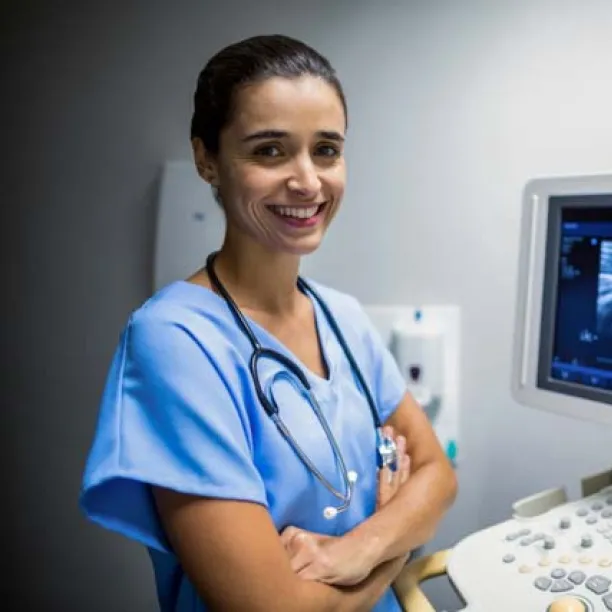
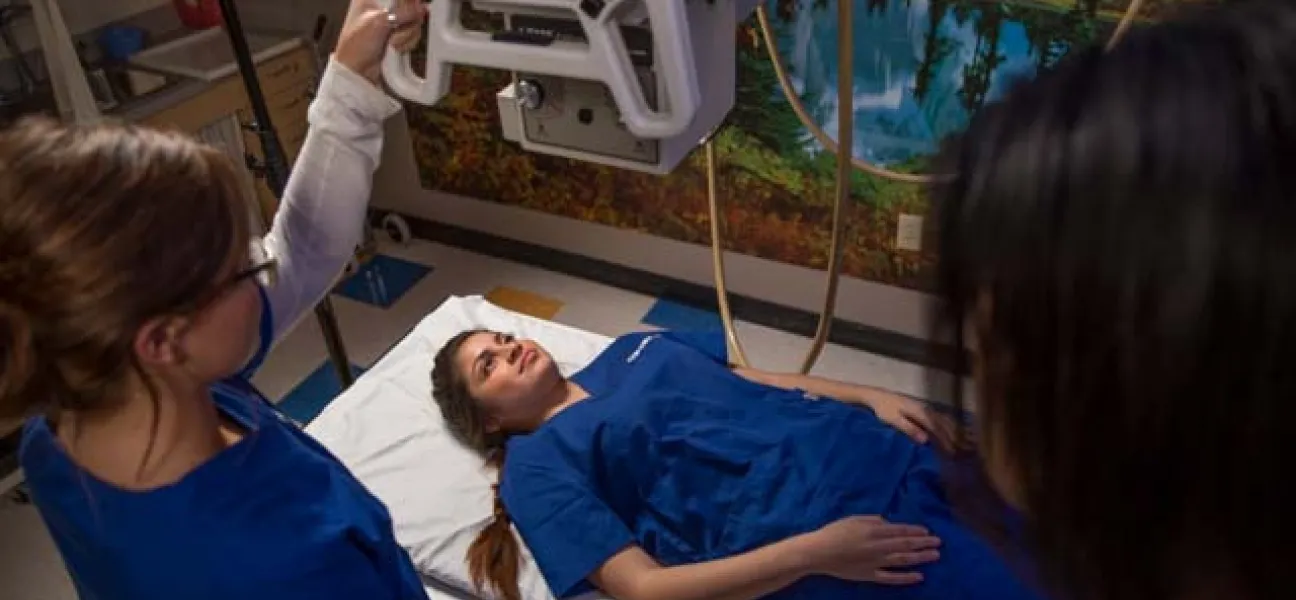
Perform the Tests that Help Doctors Treat Patients and Save Lives
- Learn to perform X-rays in our associate in applied science degree program.
- Combines classroom study with a clinical practice experience to ensure you apply your skills in the real world.
- Complete your degree in as few as 20-months of study.
Jacksonville Radiologic Technology Associate in Applied Science Degree Program Overview
X-rays are an important part of diagnostic and preventive medicine. The specialists who operate this equipment are known as radiologic technologists—“rad techs” for short—and they make a difference in the lives of patients every single day. If you’re a detail-oriented person who loves working with both machines and people, becoming a rad tech could be the right path for you.
At Concorde Career Institute in Jacksonville, we offer an AAS degree in radiologic technology that equips you with the combination of theoretical knowledge and practical clinical skills you need to perform X-rays safely and accurately. You’ll also learn fundamental principles for recording results, and working effectively with patients—all in as few as 20-months.
Take the Next Step Now
Discover if training to become a radiologic technologist is right for you. Schedule a private in-person tour or virtual interview with an Jacksonville Campus admissions representative today.
For Radiologic Technologists, the U.S. Bureau of Labor Statistics projects a 10-year national growth (2025-2035) of 5% in job openings including openings due to net employment changes and net replacements. See https://www.bls.gov/ooh/healthcare/radiologic-technologists.htm, for the U.S. Bureau of Labor Statistics. viewed October 1, 2026. Concorde Career Colleges is an educational institution and cannot guarantee employment or salary. For program outcome information and other disclosures, visit www.concorde.edu/disclosures.
Get Started
Curriculum
82
Semester Credits
Associate Degree
Complete both general education and technical skills as a Radiologic Technologist
120
Lab Hours
Applied Radiology Learning
Leverage theory and general study curriculum in practice through lab work
This program combines general education, science courses and practical imaging skills. After graduation, you will be prepared to take the American Registry of Radiologic Technologists (ARRT)examination to become a Registered Technologist in Radiography, or RT(R).
- Introduction to Radiologic Technology
- Anatomy & Physiology
- Positioning I, II and III (with Labs)
- Patient Care in Radiology
- Principles of Exposure
- Radiographic Physics
- Advanced Imaging
- Registry Review
The program provides and maintains a supportive learning environment and curriculum that prepares students for entry-level, diagnostic radiographer positions.
Goal 1: Students will demonstrate clinical competency.
Student Learning Outcomes:
- Students will utilize proper positioning skills.
- Students will obtain radiographs of acceptable diagnostic quality.
- Students will exercise proper radiation protection.
Goal 2: Students will develop problem solving and critical thinking skills.
Student Learning Outcomes:
- Students will be able to modify standard procedures to accommodate non-routine patient conditions.
- Students will be able to demonstrate the ability to critique images to determine diagnostic quality.
Goal 3: Students will apply effective communication skills.
Student Learning Outcomes:
- Students will demonstrate effective oral communication skills.
- Students will exercise effective written communication skills.
Career Outlook
Demand for Radiologic Technologists
This field is forecast to continue its growth because of an increase in breaks and fractures due to osteoporosis and other medical conditions unique to a growing aging population. Radiologic techs may work at:
Hospitals
Clinics
Private Practices
Group Practices
Address and Hours
Jacksonville Campus
-
7259 Salisbury Road, Suite 120, Jacksonville, Florida 32256
- Phone (904) 515-5518
- Fax (904) 807-0108
Campus Hours of Operation
- Monday - Thursday 9 am - 8 pm
- Friday 8:30 am - 5 pm
- Saturday 9 am - 1 pm
- Sunday Closed
Financial Aid
As part of our commitment to your success, Concorde ensures that you have access to comprehensive information and guidance in navigating the financial aid process. Concorde offers financial aid and scholarship programs to those who qualify.
Financial Aid
Get financial support for your education with our dedicated financial aid team by your side.
Review Your Options
Scholarships
Find the perfect scholarship for your health care goals based on your background, programs or other criteria.
Search ScholarshipsScholarship Opportunities
Healthcare Demand Grant
The Healthcare Demand Grant is designed to assist new, enrolling students who are pursuing education in a healthcare program. No application process. All newly enrolled students are reviewed for eligibility.
Previous Education Grant
The Previous Education Grant is designed to assist new, enrolling students who are pursuing education in a healthcare program and who have previously graduated from an accredited postsecondary institution with an associates, bachelors or masters degree.
First Responder Grant
Available to any first responder personnel intending to continue their education at Concorde Career College.
High School Senior Grant
Available to graduating high school seniors who have been issued a high school diploma or its equivalent and intend to continue their education at Concorde Career College or Concorde Career Institute.
Finish Line Grant
The purpose of the Finish Line Grant is to assist eligible former Concorde students wanting to earn their educational credential and who face documented financial...
Institutional Accreditation and Licensure
Accreditation and licensure are an important part of an academic institution’s operation.
Visit our Accreditations and Licensure page for more details about our accreditations and licensure.
Frequently Asked Questions
Didn't find the answer to your question? Send us an inquiry and we will be happy to answer all your questions!
The Radiologic Technologist program can be completed in as few as 20 months. Please check with an admissions advisor for program length information.
According to BLS.gov, the Radiologic Technologist job field is projected to grow by 5% through 2025-2035. As the health care industry grows to meet the needs of those with medical conditions correlating to an aging population, such as osteoporosis, the need for Radiologic Technologists is expected to rise.
For Radiologic Technologists, the U.S. Bureau of Labor Statistics projects a 10-year national growth (2025-2035) of 5% in job openings including openings due to net employment changes and net replacements. See https://www.bls.gov/ooh/healthcare/radiologic-technologists.htm, for the U.S. Bureau of Labor Statistics. viewed October 1, 2026. Concorde Career Colleges is an educational institution and cannot guarantee employment or salary. For program outcome information and other disclosures, visit www.concorde.edu/disclosures.
For program-specific tuition information, please see the campus catalog.